Dr. Mortar: Behind the scenes of testing technical mortars
Whether it’s securing infrastructure, ensuring road safety, or reinforcing commercial buildings, the reliability of construction materials can make or break a project.
At Weber, we take this responsibility seriously and subject our technical mortars to rigorous testing to guarantee strength, durability, and performance in real-world conditions.
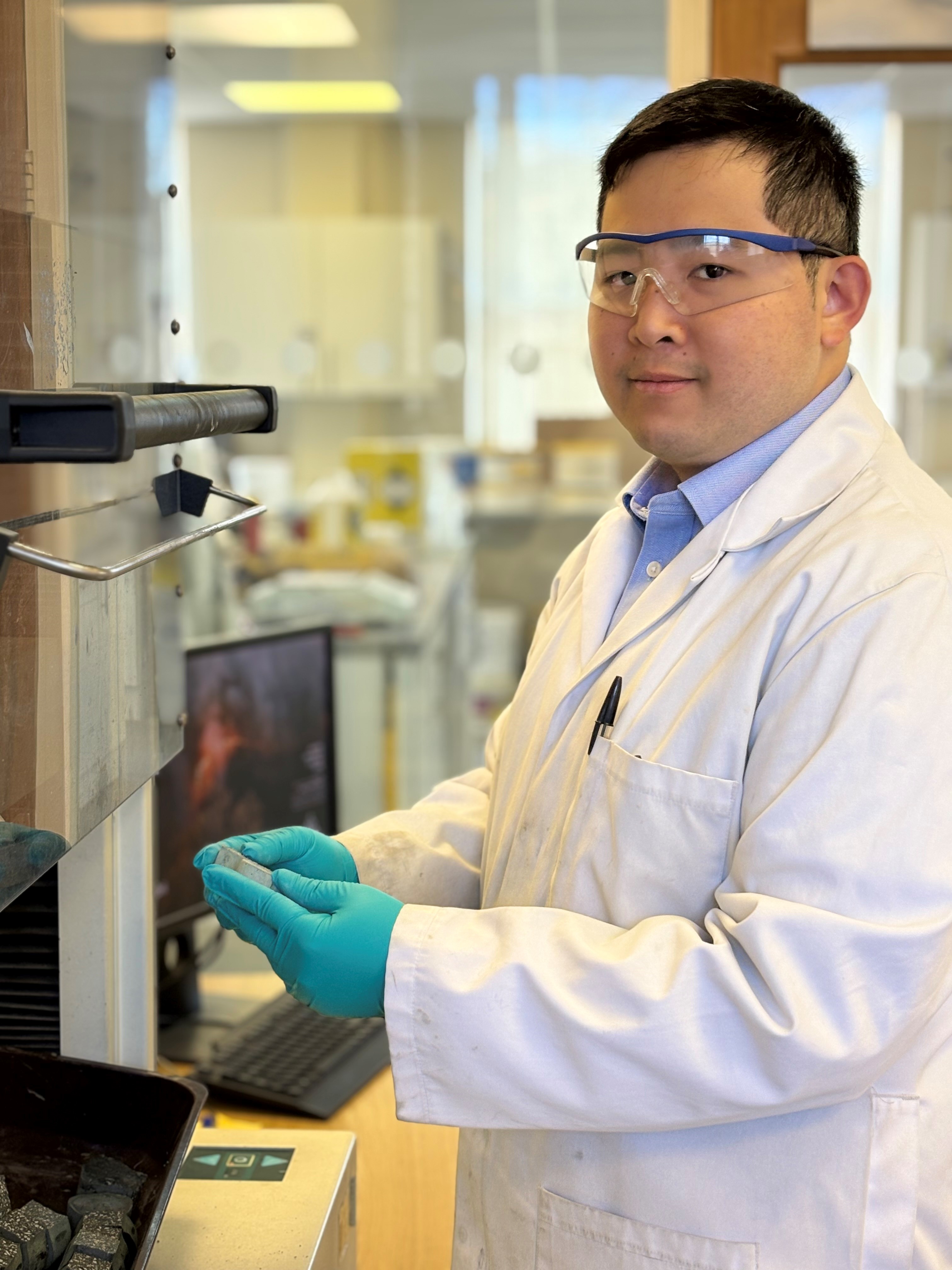
But what does that testing look like behind the scenes? As part of our Dr. Mortar blog series, development chemist Dr. Kenny Chan from our R&D team, who leads on technical mortars, gives us an exclusive insight into the science, strategy, and stats behind our testing process.
Why testing matters
Technical mortars are the unsung hero of the built environment, used in everything from pothole repairs and airport runways to bridge anchors and seawall defences.
Because these products play such a critical role in safety and durability, thorough testing isn’t just recommended – it’s non-negotiable. And there are pitfalls if you don’t get it right.
“Skipping or inadequately conducting these tests can cause anything from minor inconveniences – like roadworks being extended for a few extra days – to more extreme outcomes such as buildings being condemned due to structural failures. This is why we subject our products to rigorous testing following relevant standards and regulations,” explains Kenny.
Weber follows strict protocols, testing both in-house and with third-party laboratories to verify results.
Our testing ensures that:
Products meet and exceed British and European standards (BS EN standards)
Materials perform under extreme conditions (temperature fluctuations, freeze-thaw cycles, and chloride exposure)
End users get reliable, high-performance solutions that stand the test of time
The Weber testing process
Kenny explains that the testing and certification process varies depending on the intended use of the product and where in the world it gets used. Different applications of each product will require different performance characteristics, so the tests performed on each product must align with its specific use.
He said: “If we are working on something for road repairs, the key focus is compressive strength and quick curing times. But if it’s for a high-rise building, then fire resistance becomes a major factor. The testing is always tailored to what the product’s key feature and use is.”
Broadly speaking, this is the process Weber follows.
Step one: Internal testing: Pushing limits in the lab
Our Research & Development (R&D) team rigorously tests the product under controlled lab conditions. This includes:
Compressive strength testing – how much force can the material withstand before destruction?
Tensile strength testing – to establish the maximum stress that a material can withstand while being stretched or pulled before breaking
Chloride ion resistance – does it offer good resistance against chloride ion penetration? For example, chloride testing is vital for materials used near seawater. Chloride ions attack steel reinforcement bars, causing corrosion
Freeze-thaw cycling testing – can it endure extreme temperature changes without degrading?
Bond strength testing – does it properly adhere to surfaces?
Capillary absorption testing – measures how resistant the material is at absorbing water. Moisture can lead to corrosion, freeze-thaw damage, or biological growth. In extreme cases, trapped moisture can lead to splits
Flowable property testing – testing at different temperatures between 5 and 40 degrees Celsius to ensure the product is suitable for use across all seasons
Step two: Internal application trials
Concurrently, our dedicated team of applicators perform repeated application trials in-house to see how the product performs.
They have a wealth of experience handling and using various products and provide their earnest feedback to help us to improve the formulation.
Step three: External testing and verification
To further validate performance, once the products are good and no other adjustments to the formulation are required, we send them to accredited third-party test houses, where they undergo additional scrutiny as well as fire testing to meet modern safety regulations.
“All our fire testing is done externally and reassessed every five to six years,” explains Kenny. “We always strive for an A1 fire classification – the highest possible rating. We would wait for the results to come back and analyse them before making a decision on whether to further reformulate – resulting in further internal and external testing – or to take the material for external trials.”
Step four: Quality control from the start
Well before a new product reaches the market our Quality Control (QC) team evaluates it as soon as it leaves the production line. We compare the material to strict specification limits; if it doesn’t meet them, it doesn’t make the cut.
Step five: Real-world application trials
After testing, the material can be used for site trials with agreement from contractors and customers.
During this stage, the product is evaluated by experienced applicators, ensuring it performs as expected in actual construction scenarios.
Sometimes we invite applicators to an on-site experience day, where we showcase a few of our ‘hero’ products.
Workability, curing times, and finishing quality are all assessed, and feedback is used to refine the formula if needed.
“Sometimes our experienced applicators might say, ‘This doesn’t feel as nice to use,’ or ‘It’s missing something,’” says Kenny. “So we work closely with them to fine-tune the formulation until it’s perfect.”
Ongoing testing for existing products
We don’t just test new products: every five to six years, we reassess existing products to ensure they continue to perform at the highest level. This also ensures they meet new standards or regulations introduced since the previous schedule of testing.
“This is really about reassurance, both for ourselves and our customers,” says Kenny. “We want to ensure that the product still performs as well as it did on day one.”
Big numbers, big impact
Ever wondered just how strong our materials are? Here’s a surprising comparison:
The strength of webercem advanced precision grout after one day can withstand the equivalent weight of 200 adult elephants stacked on top of each other and will continue to develop
Our high-strength grouts can withstand compressive forces exceeding 100 MPa –that’s three times stronger than typical concrete used in buildings
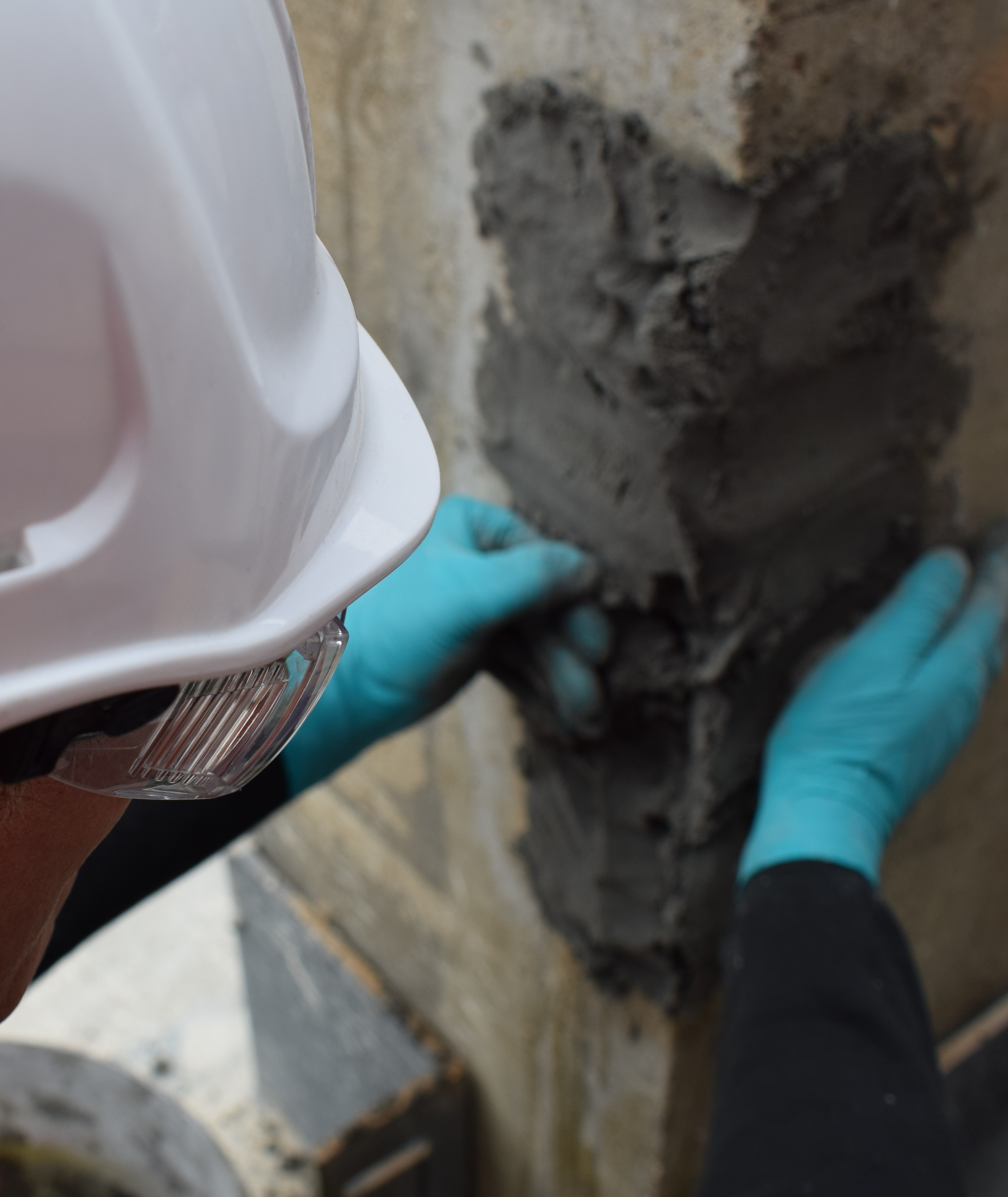
Our webercem spray RSF sets in just 10 minutes – fast enough to be applied between tides for seawall repairs
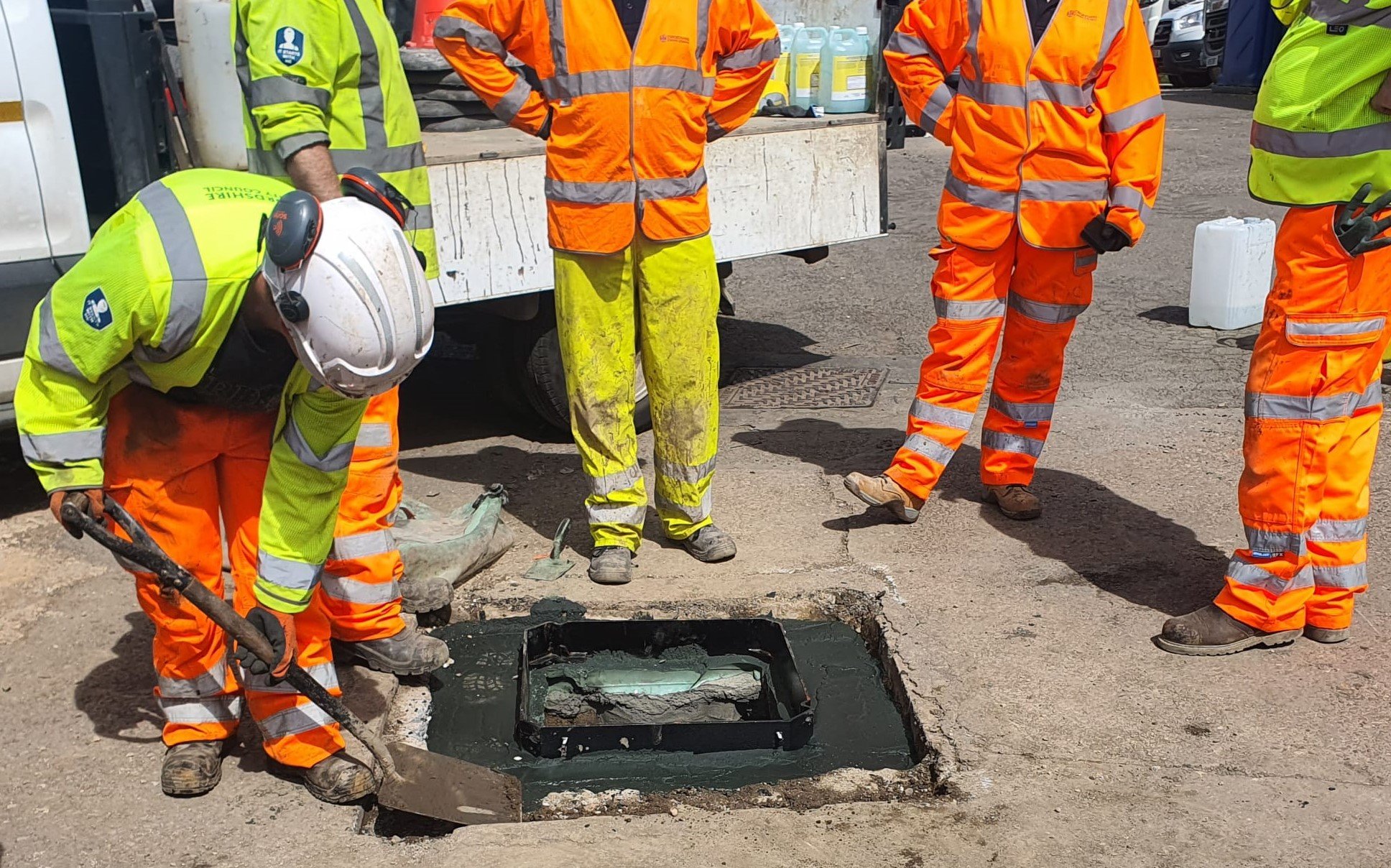
Meanwhile, webercem install plus reaches 25 MPa in one hour, allowing roads to be reopened just two hours after application