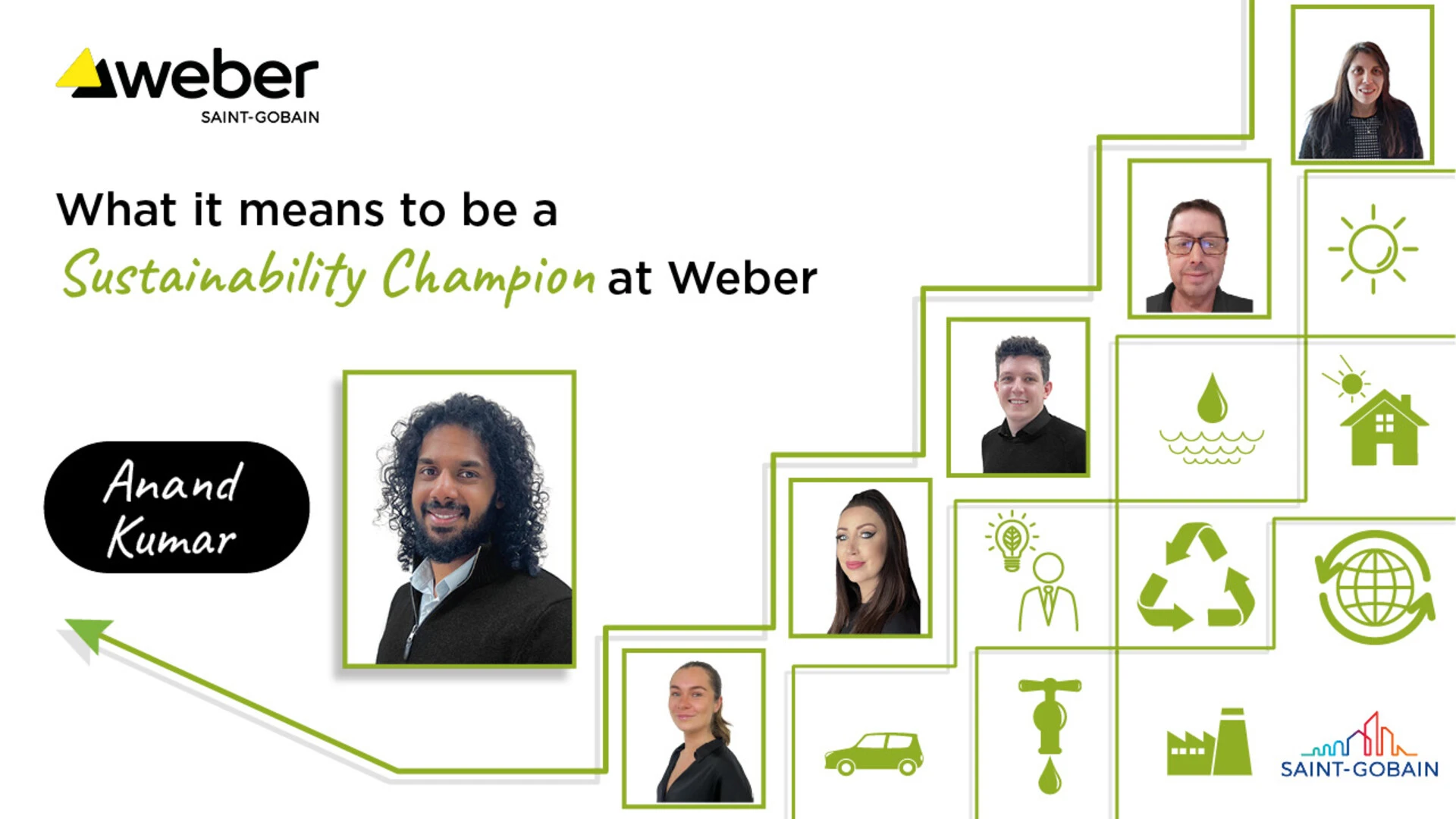
What it means to be a Sustainability Champion at Saint-Gobain Weber
Weber’s dedicated team of sustainability champions helps us make progress towards reducing our environmental impact as a business.
In this blog series, we will be speaking to them to find out more about what they do.
Anand Kumar is our regulatory affairs and chemical compliance specialist. He plays a crucial role in ensuring product compliance, chemical safety, and sustainability initiatives.
Here, he shares insights into his career, his work at Weber, and the importance of sustainability in the construction industry.
Can you tell us a little about your background and how you ended up at Weber?
I originally wanted to be an architect, so I’ve always had an interest in construction. But at school, I leaned more towards science and ended up studying biomedical sciences at university.
During my degree, I did a year in industry at a pharmaceutical company, which introduced me to regulatory affairs. That’s when I realised that I enjoyed the compliance side of things – but I didn’t want to work in a lab.
After graduating, I worked as a Regulatory Specialist for the Health and Safety Executive (HSE), where I focused on chemical legislation and compliance. I learned a lot, but I was only seeing regulations from the public sector side.
I wanted to understand how businesses navigate compliance from the industry perspective. That’s when I found Weber. I researched the company and saw its values, sustainability goals and culture, and knew it was the right fit.
I’ve now been here almost two years, and I love it.
What does your role as a Regulatory Affairs and Chemical Compliance Specialist involve?
I wear a lot of hats. My role focuses on health, safety, and legal compliance across both our raw materials and finished products.
I work across several key areas:
Chemical legislation – ensuring compliance with laws like the Registration, Evaluation, Authorisation and Restriction of Chemicals (REACH), the Classification, Labelling and Packaging (CLP), and Biocidal Product Regulations (BPR)
Raw material safety – checking whether our suppliers have met their compliance obligations, especially post-Brexit
Chemical exposure assessments – evaluating new materials and ensuring their safe handling on site
Product labelling – ensuring the correct hazard pictograms and safety information appear on our packaging
Construction Products Regulation (CPR) – helping to ensure our products meet performance and safety standards
Transport safety – making sure our logistics teams comply with dangerous goods transport regulations
Construction Product Information (CCPI) – supporting the business to ensure product information is clear, accurate, and up to date
Essentially, I make sure our products meet legal requirements, are safe for people and the environment, and support sustainability in the long term.
How does your role contribute to sustainability at Weber?
Sustainability is at the core of what I do. I scrutinise every raw material we use – not just in terms of current regulations, but also future environmental risks.
For example, I check:
Is this material likely to be restricted in the future?
Is it harmful to humans or the environment?
Can we replace it with a safer, more sustainable alternative?
I also work on packaging sustainability, making sure we comply with upcoming regulations years in advance. It’s about horizon scanning; predicting challenges and acting before they become urgent problems.
Another aspect is avoiding greenwashing. Regulations like the CLP prohibit misleading marketing terms like "eco" or "non-toxic" unless they are factually correct. This ensures that when we make sustainability claims, they are accurate and verifiable.
What inspired you to become a Sustainability Champion at Weber?
It started when I got involved in the company Climate Fresk workshops, which help educate colleagues about climate change and sustainability. I was asked to join the Sustainability Champions team, and I jumped at the chance.
I love finding practical, impactful ways to make Weber a more environmentally friendly company. One of my first contributions was introducing a system to make sure our sustainability ideas actually turned into real initiatives, keeping us accountable
What sustainability projects have you worked on as a Sustainability Champion?
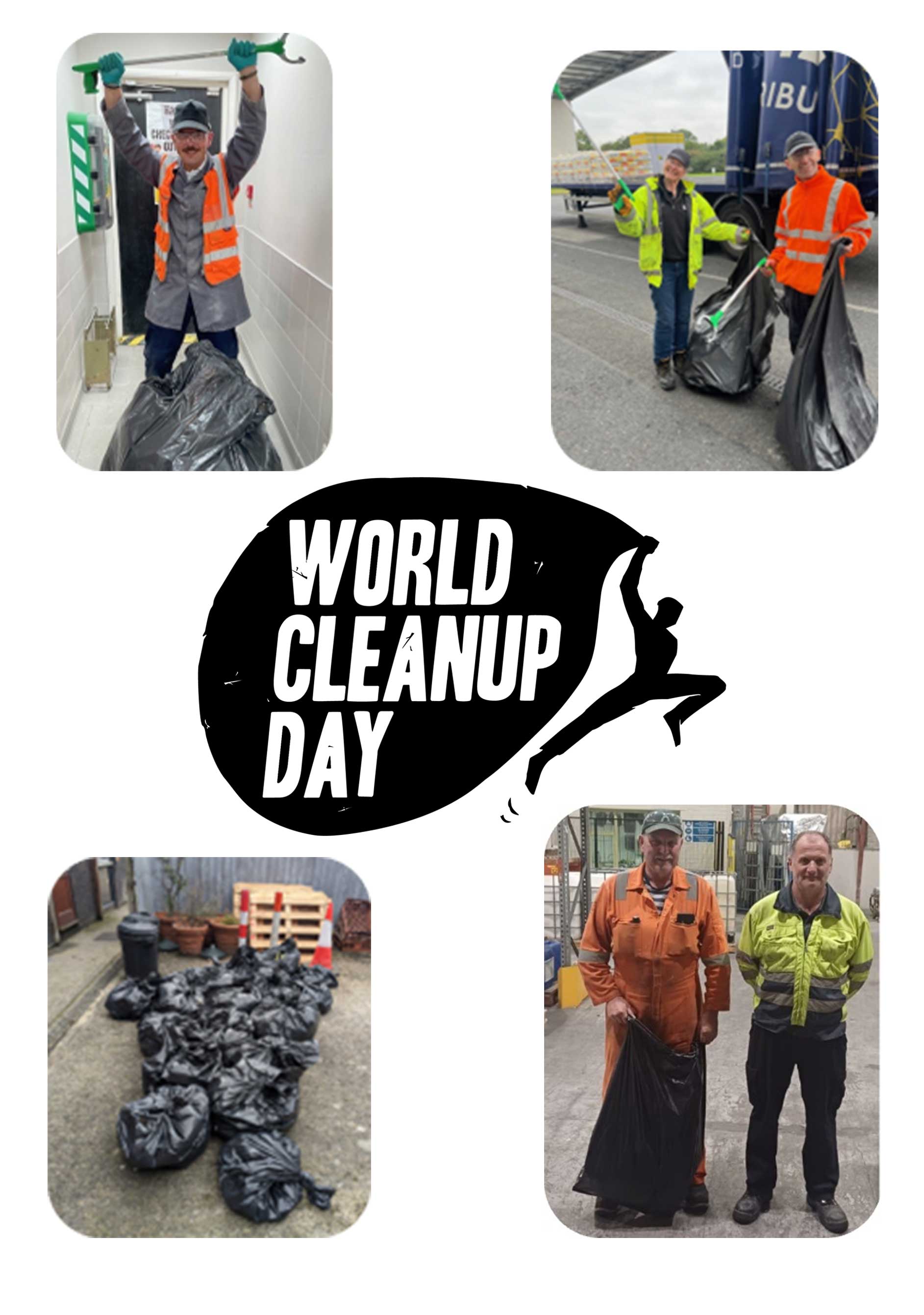
One of my proudest moments was organising a company-wide litter pick for World Clean-Up Day.
We planned three litter-picking sessions, covering the Weber site in Flitwick and the surrounding local area.
The turnout was fantastic and we collected a huge amount of waste – one of our sites picked over 87 kg of litter. It was so well received that we’re planning to do it twice this year.
Small actions like this spread positive behaviours; if someone sees us picking up litter, they might think twice about dropping their own.
Can you explain what the Code for Construction Product Information (CCPI) is and why it matters?
The CCPI was developed in response to the Grenfell tragedy. The Independent Review of Building Regulations and Fire Safety, led by Dame Judith Hackitt, found that there was a lack of clear, reliable, and accurate information on construction products, which led to safety risks.
The CCPI aims to fix this by ensuring that:
Construction product information is clear, accurate, and up to date
Ethical marketing practices are followed (e.g. no greenwashing)
Product claims are backed by third-party verification
Weber is currently working towards CCPI compliance, and we have a dedicated integrated management systems manager overseeing the process.
It’s complex, as every single product must be assessed individually, but it’s crucial for improving trust and transparency in the industry.
If you could make one sustainability change in the construction industry overnight, what would it be?
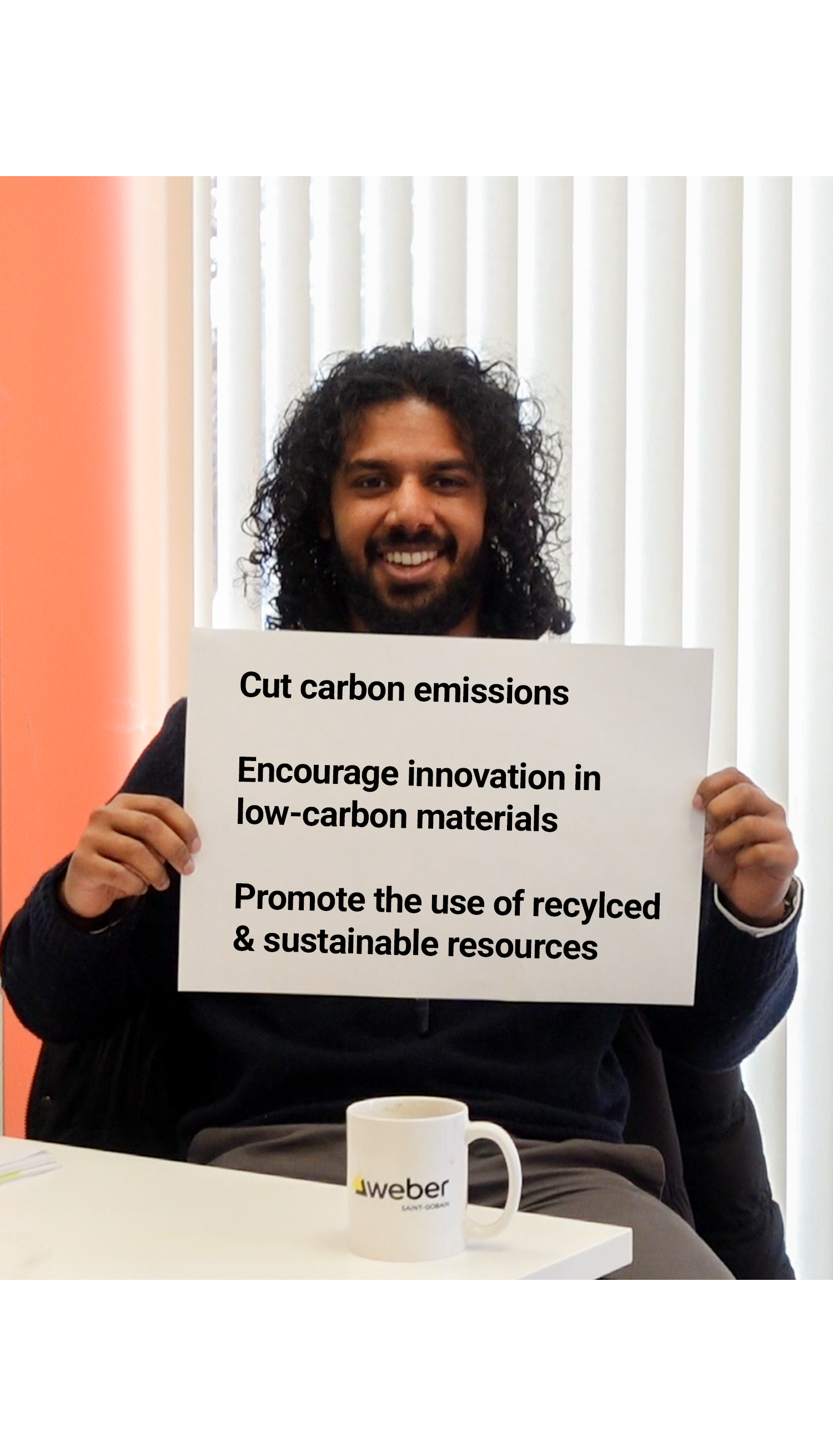
Mandate the use of low-carbon materials in all construction projects.
The industry is already moving in this direction, but if we mandated it, it would:
Drastically cut carbon emissions
Encourage innovation in low-carbon materials
Promote the use of recycled and sustainable resources
For example, we could use more low-carbon concrete, recycled materials, and sustainable timber.
Right now, we’re trying to incentivise these changes – but if they were legally required, we’d see much faster progress.
What’s your message to people who think individual sustainability actions don’t make a difference?
I hear this a lot. People saying: “What difference can I make?”
But that’s the wrong mindset. Small, incremental changes add up.
Every positive action – whether it’s choosing a sustainable material, picking up litter, or reducing waste – has a ripple effect. If enough people make small changes, it creates a much bigger impact.