Dr. Mortar: The chemistry behind sustainable mortars

Dr Mortar Blog

We are proud to be leading the charge with innovative industrial mortar solutions at Saint-Gobain Weber. Our new Dr. Mortar blog series will, over the coming months, look behind the scenes with our chemists, innovators and research and development leaders at how we are developing construction products that combine performance with sustainability.

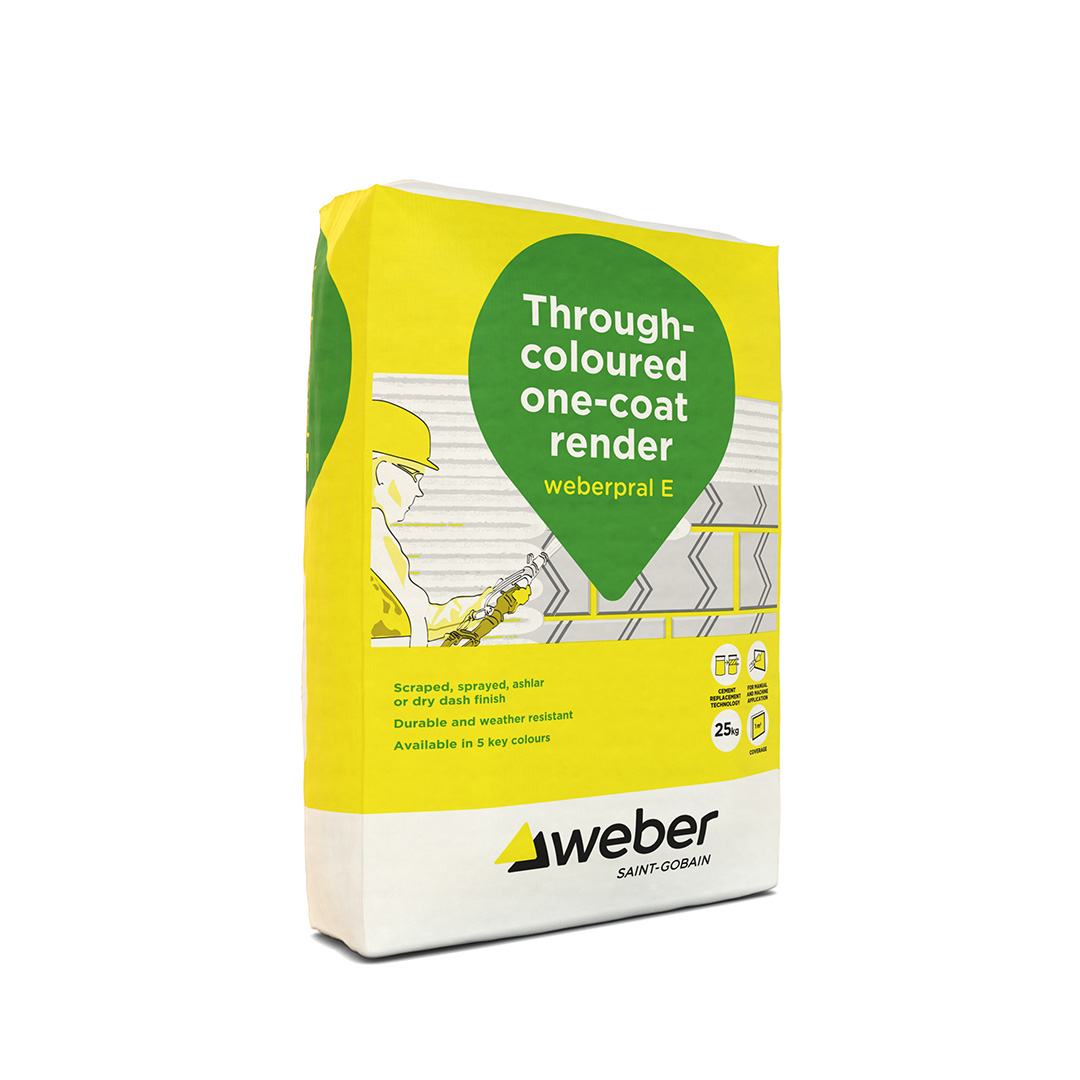
The first of our Dr. Mortar blog series dives into the chemistry, the challenges, and our journey to creating our new monocouche render. Using cement replacement technology, weberpral E uses less water in raw material supply, and saves energy consumption over the product lifecycle.

Why sustainable mortar matters

The construction industry is one of the largest contributors to global CO₂ emissions, with cement production alone accounting for approximately 8% of the world’s total emissions, and 9% of the UK’s production emissions.

As urbanisation continues to accelerate, the demand for building materials like render continues to grow, intensifying the environmental impact. 

However, cement-based products, while essential, are inherently unsustainable due to their reliance on raw materials and energy-intensive production processes. 

As highlighted by McKinsey in its analysis of the cement industry’s future, global trends in decarbonisation are placing increasing pressure on manufacturers to innovate and develop more sustainable supplementary cementitious materials (SCMs) and initiatives to capture carbon in the process.

Regulatory frameworks, customer demands, and technological advancements are converging to create an environment where sustainable products are not just desirable but essential. 

For Weber, the goal is clear: reduce CO₂ emissions, enhance performance, and ensure future-proof materials. Addressing this challenge is not just a responsibility, but an opportunity to lead the way toward a more sustainable future.


The journey to weberpral E

The creation of weberpral E wasn’t just a tweak to existing formulations but an industry-first transformation. 

Dr. Oliver Glenister, Innovation Manager, and Dr. Sarah Lowe, R&D Team Leader, were pivotal to the product’s development.

Oliver explains: “We knew that traditional cement replacements like GGBS (ground granulated blast furnace slag) are a finite resource. As electric arc furnaces take over, GGBS supply will dwindle, so we had to think differently.”

The team explored alternatives and identified a SCM that not only replaced cement but aligned with long-term resource availability. 

It wasn’t a simple swap, as Sarah points out: “From a chemistry perspective, we had to re-engineer the formulation to ensure it worked seamlessly in machinery and met performance expectations.

“The first production trials with the new material highlighted significant challenges. The render wouldn’t flow properly through the machinery that applicators use to pump it onto walls, causing interruptions and inefficiencies. 

“This required us to go back to the lab and fine-tune the formulation, ensuring the material’s rheology (the study of the flow of solid and liquid materials) was suitable for both manual and machine application. Additionally, we had to maintain the high-quality finish and durability that customers expect from Weber products.”

The adjustments involved testing various additives and modifying particle size distributions to balance workability, setting time, and strength. 

This iterative process ensured that the final product not only met the technical requirements but also offered a seamless experience for applicators.

Innovation and collaboration

From sourcing and processing new materials to redesigning silo systems and overcoming logistical challenges, developing weberpral E involved more than lab work; the process was a true cross-functional achievement.

“We identified around 40 major challenges – from production through to application – that could have stopped the project in its tracks,” said Oliver. “But step by step, we worked through each issue.”

This resilience paid off. The result? A render that reduces CO₂ emissions from fossil fuels by 22%, and 10% CO overall in comparison to existing render products, while maintaining Weber’s renowned quality.

What makes Weber different?

Weber’s approach to sustainability sets it apart. Unlike some competitors, Weber’s CO₂ savings aren’t offset by external programmes. 

As Sarah explains: “We focus on actual CO₂ reductions – not planting trees or carbon offsets. The changes come directly from our products and processes.”

The company’s global collaboration is another strength. Weber shares knowledge and innovations across borders, ensuring solutions like weberpral E can scale to other markets.

“It’s not about perfection: it’s about progress. We’re working towards solutions that are net better for the planet, and we’re just getting started” - Dr. Sarah Lowe

The future of sustainable mortars

Weber’s journey doesn’t stop with weberpral E. The team is already exploring improvements to other products, pushing the boundaries of sustainable cement replacements.

“There are some amazing initiatives coming to fruition in the industry, such as installing carbon capture schemes, and research into electric arc furnaces which are smaller and more efficient,” said Oliver. 

“Our job here is to find these pockets of innovation and explore how we can scale it at Weber. We’re looking at groundbreaking innovations that I can’t yet say much about but are exciting to be involved with. It’s about finding scalable solutions that deliver real results.”

A step towards net zero

Our commitment to achieving Net Zero by 2050 is evident in every step we take. With projects like weberpral E, we have been focusing on the biggest CO₂ contributors first and using the lessons learned to improve other products.

The story behind weberpral E showcases the innovation, perseverance, and collaborative spirit needed to tackle sustainability in construction. 

Stay tuned for the next blog in the Dr. Mortar series as we explore more ways in which Weber is at the forefront of sustainable building materials.

Sources:

How the cement industry is creating carbon-negative building materials

The future cement industry: A cementitious ‘golden age’?

Embodied carbon regulation – alignment of industry policy recommendations

Click Compare to help you choose the right product for your project, if you need further assistance please email [email protected]

Compare