Using a notched trowel when tiling
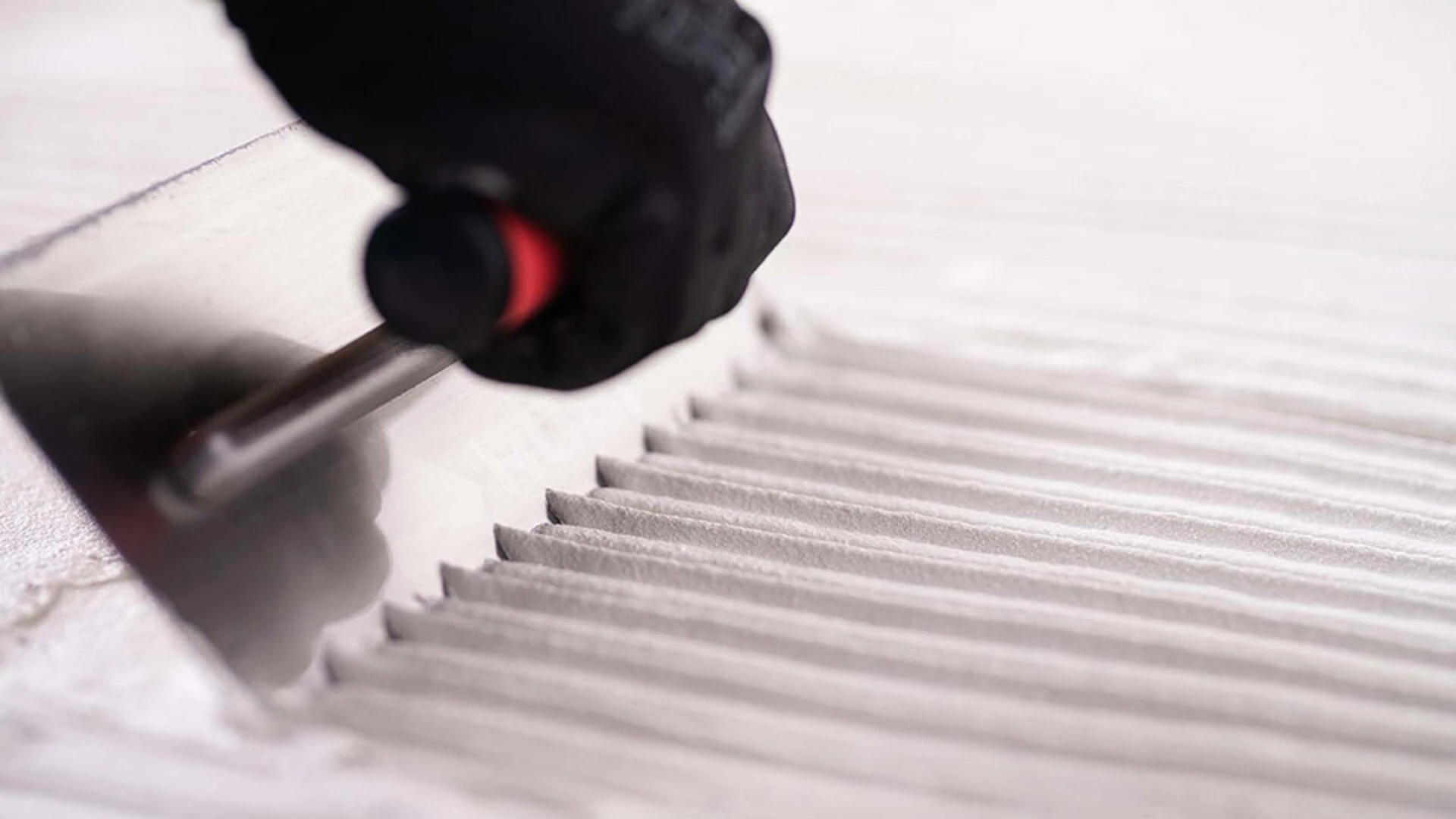
We partnered with Pro Tiler Tools and RUBI to prepare this blog on how to choose and use a notched trowel when tiling. A notched trowel plays an essential role in ensuring your tiles adhere correctly and consistently to the substrate. In this blog, we’ll look at key questions that you may have about notched trowels, covering everything from their purpose to selecting the right size notch for your project.
Types of notched trowels
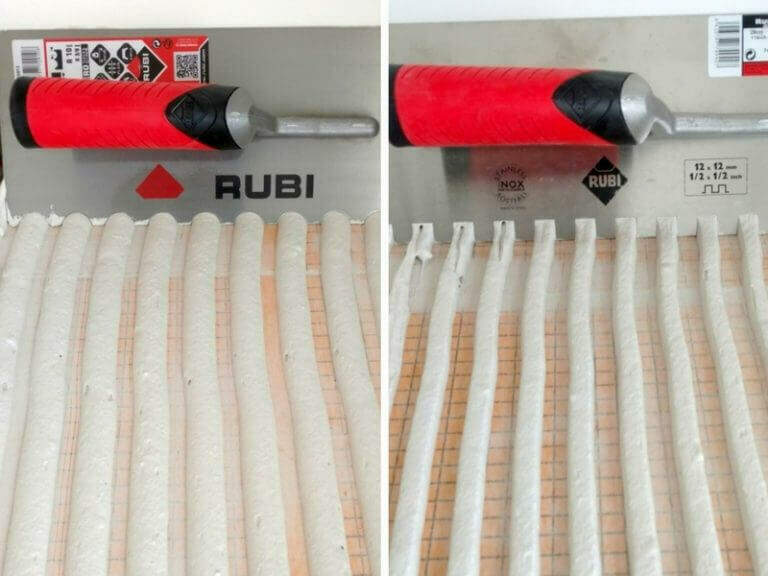
There are several types of notched trowels, each suited for different tasks. The two most common types are:
- Square notched trowel: this trowel has square-shaped notches and is versatile, suitable for a variety of tile sizes
- U-notched trowel: ideal for fixing large format wall and floor tiles with recessed or keyed back patterns
What size notched trowel should I use?
Choosing the right trowel notch size is important. The size of the notches controls the thickness of the adhesive layer. So, if you’re unsure what type of trowel to use for a project, consider the tile size, how flat it is, and the quality of the substrate. Tiles should be installed on a substrate that achieves a flatness standard of SR1 i.e no more than 3mm variation over a span of 2m.
The notches are measured in millimetres, the first number is the width of the notches (the distance between the teeth), and the second is the depth of the notch. A tile trowel with only one measurement (i.e. 12mm trowel) means that both measurements are the same.
When using a trowel it is generally held at 45° angle from the floor or wall that the tiles are being applied to, meaning a 12mm notched trowel will give adhesive ribs of around 8 or 9mm that are 12mm apart.
Determining which trowel size is correct for your project depends on the tile itself and the substrate. Specifically, it depends on the size of the tile, how flat the tile and the substrate are. The less flat the tile is, the more adhesive you need beneath it, which means a larger trowel size.
Here’s a rough guide based on a good surface to the substrate and an in-plane tile:
- 6mm notched trowel: for small tiles of less than 100mm - generally used with ready-mixed adhesives
- 8mm notched trowel: for medium tiles between 100mm-200mm – cement-based adhesives only
- 10mm notched trowel / 12mm notched trowel: for medium to large tiles 200mm plus – cement-based adhesives only
- 15mm notched trowel / 20mm notched trowel: for very large tiles – cement-based adhesives only
The appropriately sized notched trowel is important for achieving proper adhesive coverage on both the substrate and the back of large format tiles ensuring an even delivery of adhesive for a secure bond.
How to use a notched trowel effectively
Prep: ensure your surface is clean, dry, and level. Any dust or debris must be removed as it can prevent the tile adhesive from bonding properly.
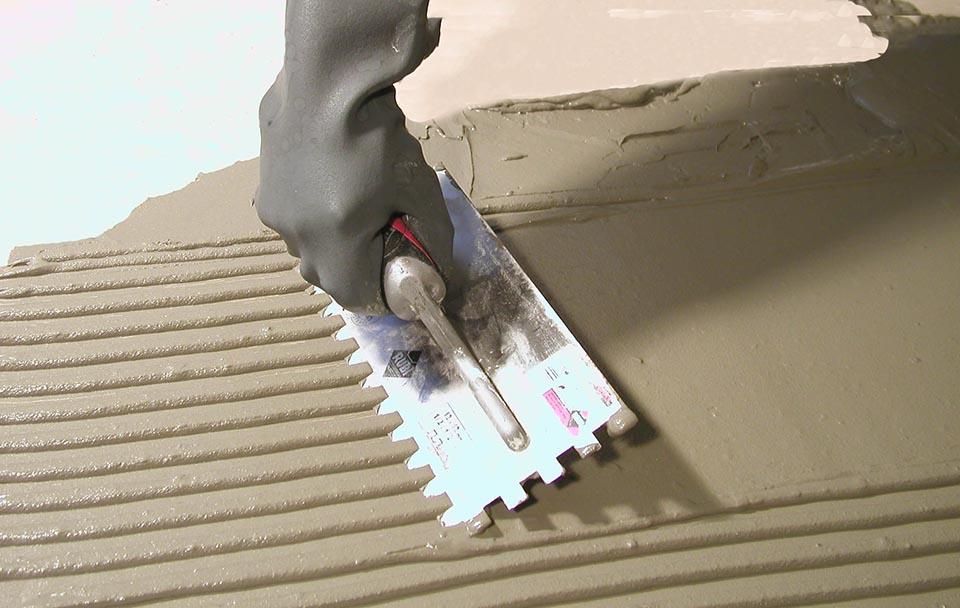
Get sticky: scoop the adhesive with the smooth side of the trowel and spread it over a small area of the substrate. This helps to initially spread the adhesive evenly. We recommend that you back-butter the tiles. Are you unsure of which tile adhesive to use? Read more here
Get your groove on: hold the trowel at a 45-degree angle and run the notched edge through the adhesive. This motion creates even grooves, ensuring uniform thickness.
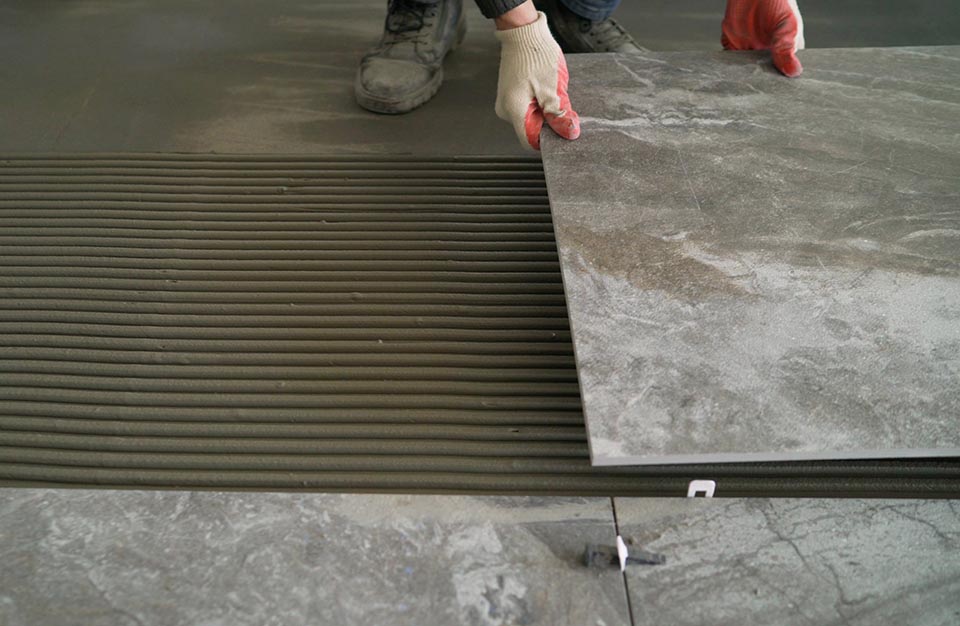
Get setting: place your tiles onto the tile adhesive, pressing firmly and with a slight twisting motion to ensure they are set correctly and the adhesive spreads evenly underneath
Top tips when using a notched trowel
Work in small sections: only spread tile adhesive over a small area at a time. This prevents the adhesive from drying out before you set the tiles. Usual best practice is that enough adhesive is spread that can reasonably be tiled in a 20-minute period (typically 1m²).
Check coverage: it is good practice to remove a tile periodically to check that sufficient coverage has been achieved. If correct coverage isn’t achieved, the angle which the trowel is being used may need to be increased. When tiling a wall, a minimum of 85% total coverage is recommended beneath a tile in a dry area. In wet areas, and on all floors, it is recommended that all voids behind the tile should be eliminated with 100% coverage being the ideal installation.
Keep clean: clean any excess adhesive from the tile surface and your tools as you work to avoid a messy finish.
For more information...
Mastering the use of a notched trowel is essential for any tiling project. By choosing the right size and type of trowel and applying the tile adhesive correctly, you can achieve a professional finish that ensures your tiles are securely and consistently set.
If you need help with your next tiling project, contact the experts at Pro Tiler Tools via email at [email protected] or call them at 01604 859800, or download the RUBI Definitive Guide to Cutting and Laying Tiles here.
For help with choosing the correct tile adhesive for your project, use our adhesive selector here. If you require further assistance contact our technical team on [email protected] or call +44(0)1525 718877 (option 2)
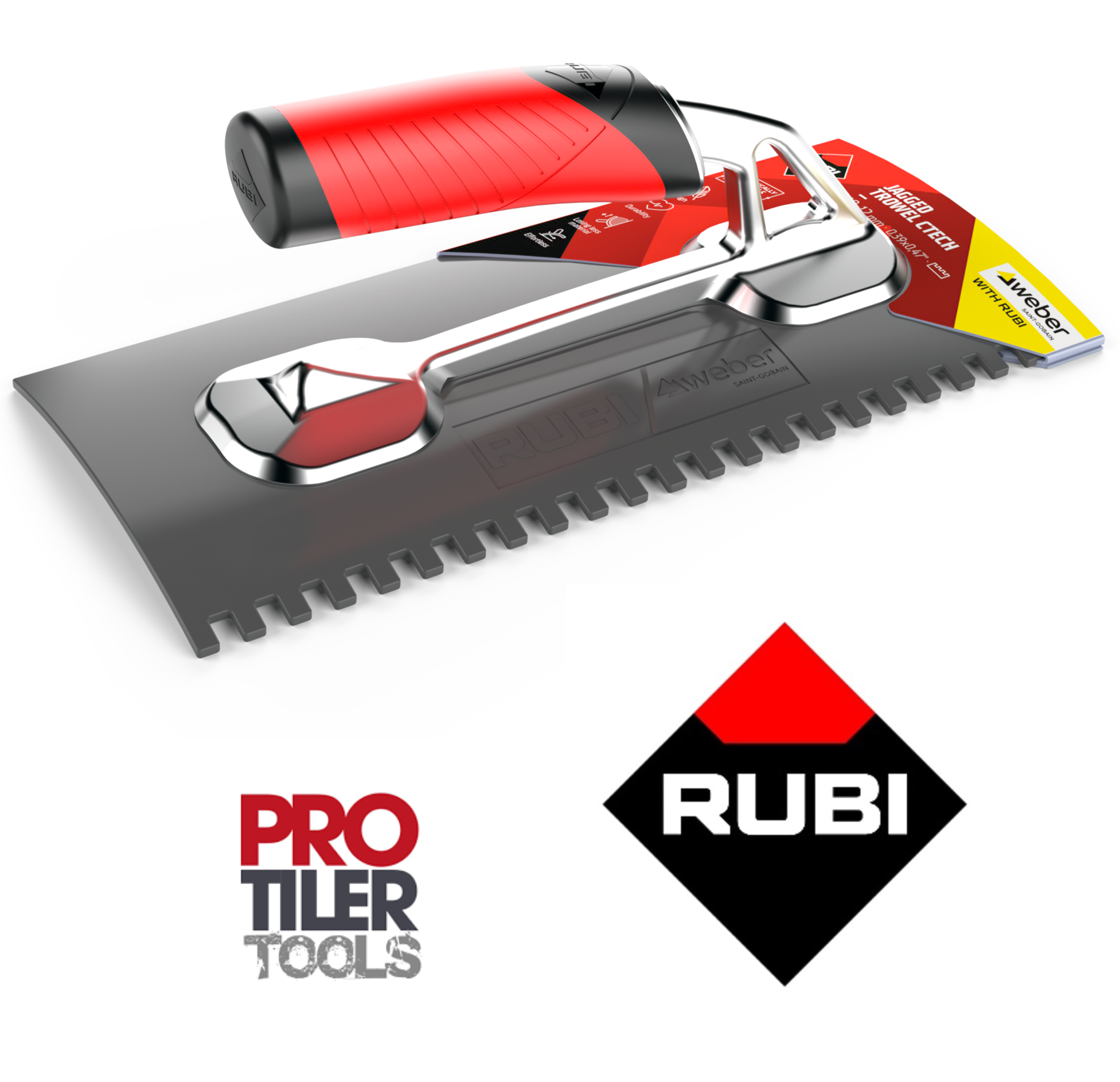
Have you seen the new TECH-FLEX Trowel developed through a collaboration of RUBI and Weber?
The TECH-FLEX notched trowel plate is made from a robust plastic that gives greater flexibility and durability (reduced wear and rust-free) compared to traditional metal plates and is also safer (no sharp edges). It ensures high efficiency in adhesive distribution and less material waste thanks to the curved shape of its plate.
It also provides greater comfort thanks to its weight (10% lighter), soft grip handle, and reduced effort when applying tile adhesive.