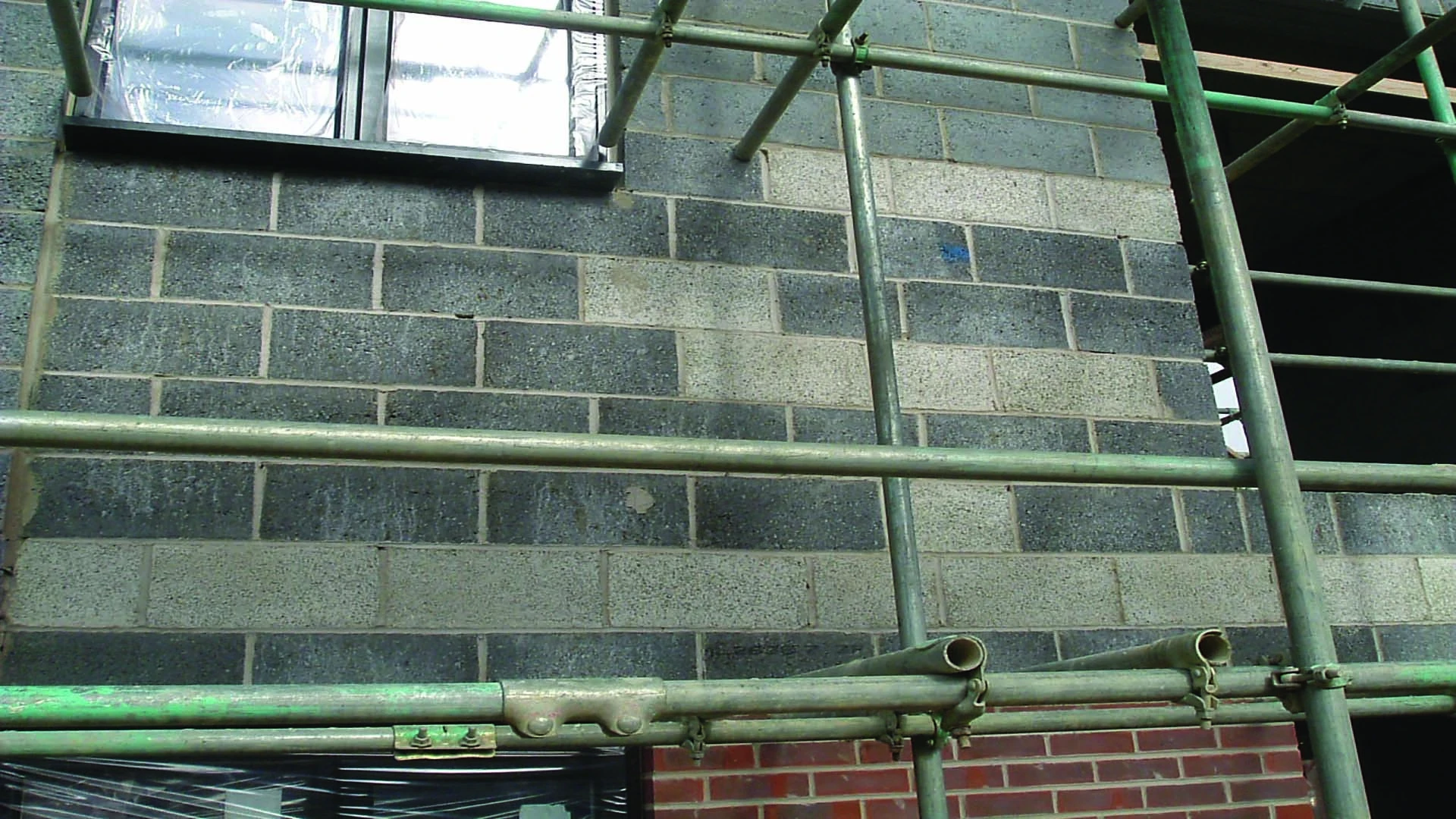
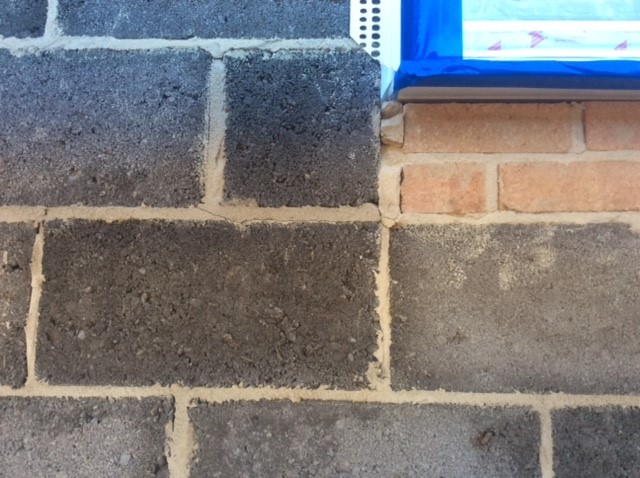
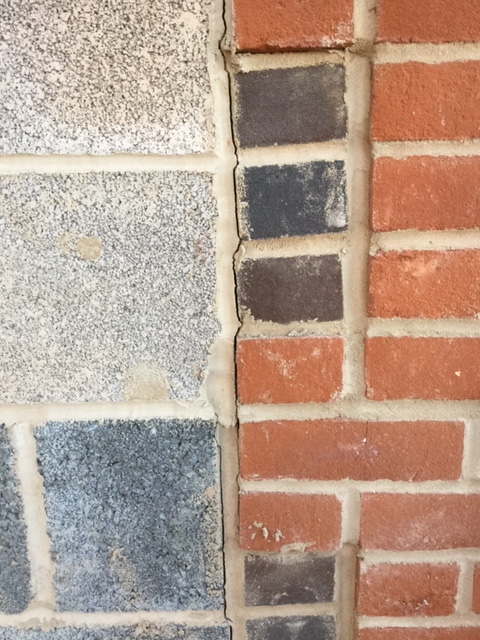
When a substrate is made up of various different types of bricks and blocks issues may arise regarding the different expansion and contraction rates between them which can lead to stress in render and even cracking over time. We have just the solution however to ensure this doesn't happen to your next project.
Check absorbency level
Before starting your job, it's essential that a suction assessment is undertaken to determine the level of absorbency within the blockwork. If the absorbency is high, you’ll need to implement extra measures before work can be carried out. In normal circumstances, careful controlled dampening with water may suffice but in certain cases, an application of weberend aid, our preparatory key coat, would be needed.
Different brick and block types
With regards to blockwork, we have also noticed sites struggling to attain a single type of block due to material shortages, resulting in the use of different blocks within the substrate. This will also prove to be an issue when applying render as although the blocks may be the same strength, the absorption rates may differ, which could result in shade variation and cracking in the render.
If this is the case, the best solution would be to use a combination solution of weber standard meshcloth and weberend aid. Incorporating mesh within the weberend aid will help spread the load over a larger area which will prevent reflective cracking due to dissimilar movement. Several top UK house builders are currently using this best practice method and are seeing positive results where material shortages mean that a range of blocks are being used.
Lastly, good adhesion is key to successfully applying render and this is dependent on how good the porosity of the substrate is. If the suction is too high, the render will not hydrate sufficiently. If it is too low, there can be issues forming a good bond. So all substrates should be clean, dry, sound, and free from anything that may interfere with the adhesion, such as oil, grease, and soluble salts.
Voice from the field
Phill Powell our Regional Application Manager in the south has seen the problem firsthand with different types of blocks being used on site
“If a high-density concrete common block (approx. 20 N/mm²) is being used as a stringer course over a medium density block build (approx. 7.3 N/mm²) there is a high risk of reflective cracking due to dissimilar movement. This can be minimised by incorporating a band of weber standard meshcloth embedded in a coat of weberend aid at this junction. If dissimilar blocks have been used sporadically then a coat of weberend aid will be fine. If different blocks are used at a given level and creates a straight joint, this again gives a risk of straight line cracking due to differential movement and dissimilar suction, I would recommend full mesh and weberend aid if this is the case.”