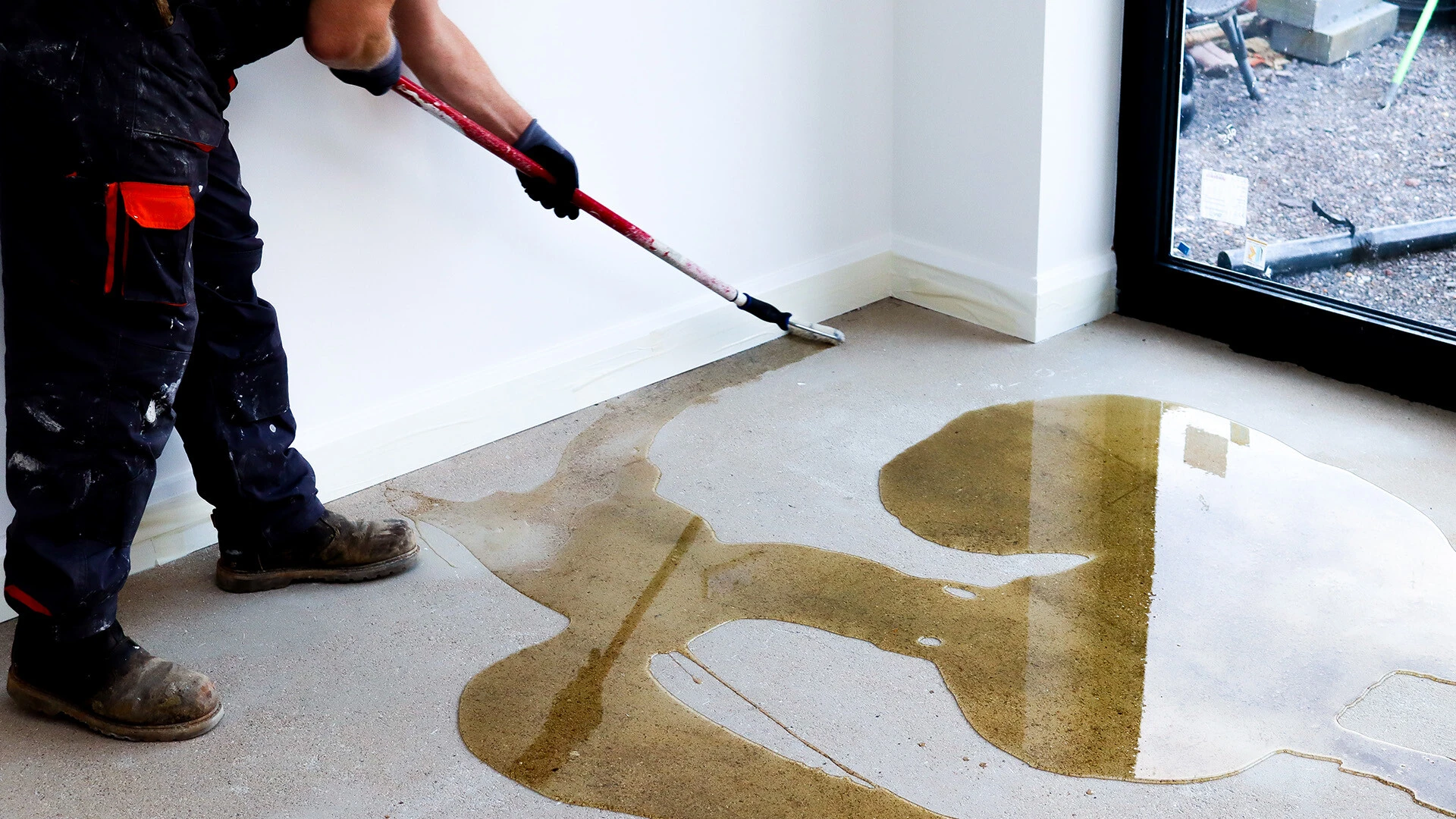
Damp-proof membranes protect building structures against damp. Whether it’s penetrating damp, residual construction moisture or — in rare instances — rising damp, it’s important that the underlying issues are addressed and fixed before any refurbishment or redecoration is carried out. Some areas where a damp-proof membrane is advised include underfloor heating and bathroom floors.
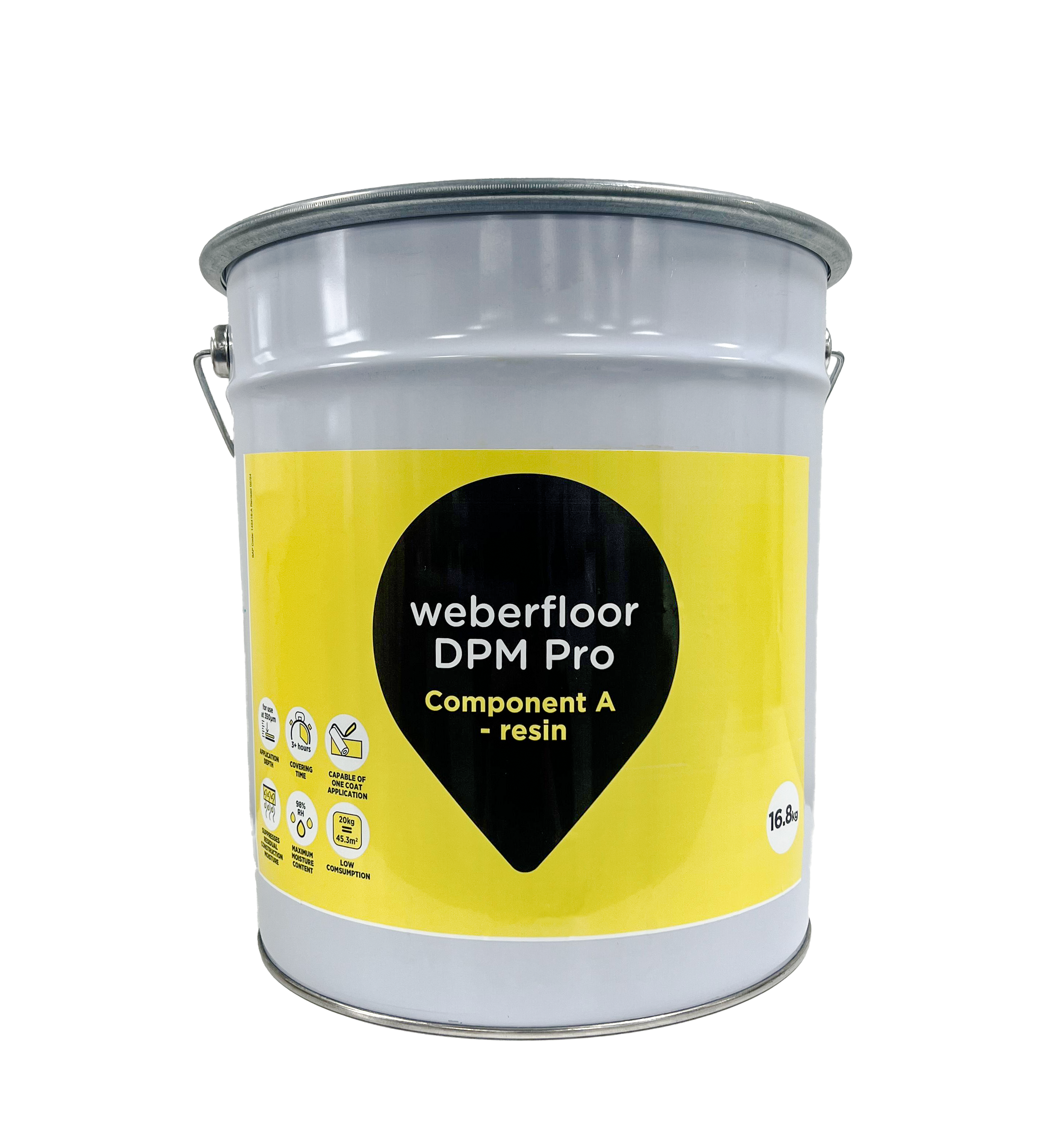
weberfloor DPM Pro offers damp proofing for concrete floors and cement based levelling compounds using an easy two-coat system. An effective liquid damp proof membrane resistant to a wide range of chemicals, it is used for oversealing cementitious surfaces which contain high levels of residual moisture. It also permits early overlaying with vinyl, carpets and resin based products after the addition of a floor screed or levelling compound, and it can be used down to 5°C, allowing work to continue during winter.
Take a look at our quick guide below on the best way to use weberfloor DPM Pro to damp-proof your floors.
1. Prepare substrate
weberfloor DPM Pro can be applied on substrates such as concrete and cement-based levelling compounds. All surfaces must be mechanically sound, dry and clean, i.e. free from dirt, dust, grease or other contamination or coating. Laitance must also be removed from concrete.
2. Mix
weberfloor DPM Pro is supplied in 2 pre-mix tin packaging (Component A = resin base and Component B = hardener) with the specific mixing ratio for use. Pour the entire contents of the hardener container (Component B) into the resin container (Component A) and blend the two materials meticulously for a minimum of 2-3 minutes.