What it means to be a Sustainability Champion at Saint-Gobain Weber
Weber’s dedicated team of Sustainability Champions helps us progress on our journey to reducing our environmental impact as a business.
In this blog series, we will be speaking to them to find out more about what they do.
Here, Environmental and Sustainability Engineer Michael Barnett shares insights into how his day job works hand-in-hand with his role as a Sustainability Champion. He also explains more about what goes into the development of Environmental Product Declarations (EPDs), Weber’s wider sustainability goals, and how the company is working towards a more environmentally responsible future.
How did you become a Sustainability Champion at Weber, and what does your role involve?
I started at Weber in November 2023 as an Environmental and Sustainability Engineer. My background and personal interest in sustainability were a natural fit for the Sustainability Champions, so I volunteered not long after starting.
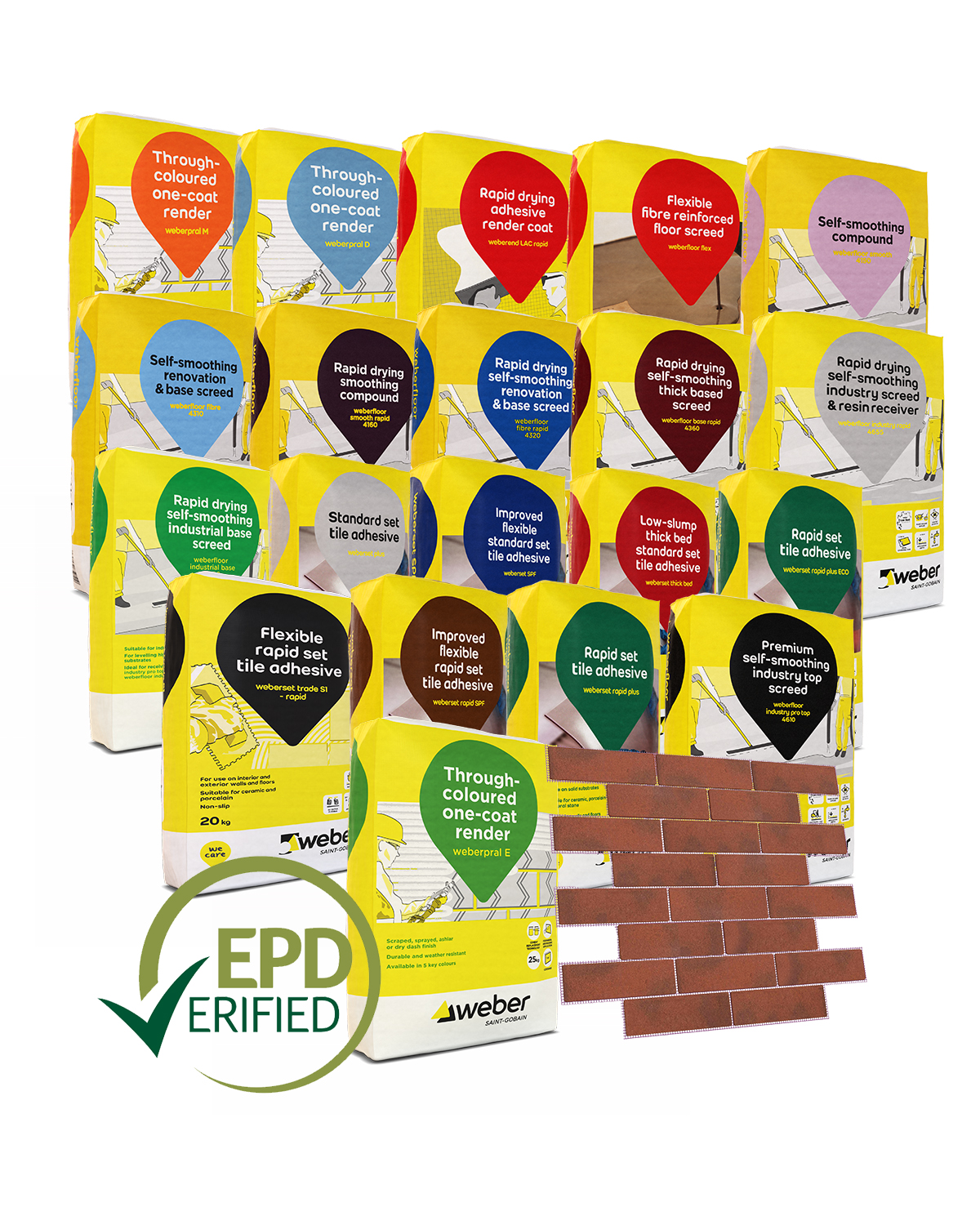
Each Sustainability Champion has a different part to play; I focus on internal sustainability initiatives, but a key part of this also involves producing EPDs. EPDs are verified reports detailing the environmental impact of our products across their entire lifecycle.
I find there’s a great crossover between what I do day-to-day and what I try to achieve as a Sustainability Champion too.
Can you explain the EPD process and what makes it so crucial for Weber?
The EPD process is detailed and requires a lot of data collection. We look at everything from the raw materials used in our products to how they’re manufactured, transported, installed, and eventually disposed of.
All of this data is fed into GaBI software for producing lifecycle assessments, which model the environmental impacts.
Producing an EPD can take up to six months, but the information we get back is critical for improving our products' sustainability. For example, the EPDs help us see where our biggest environmental impacts are, such as Scope 3 emissions, which relate to indirect emissions from the supply chain.
We have recently finalised an EPD for weberpral E – our new monocouche render. Why is this so important to Weber’s sustainability journey?
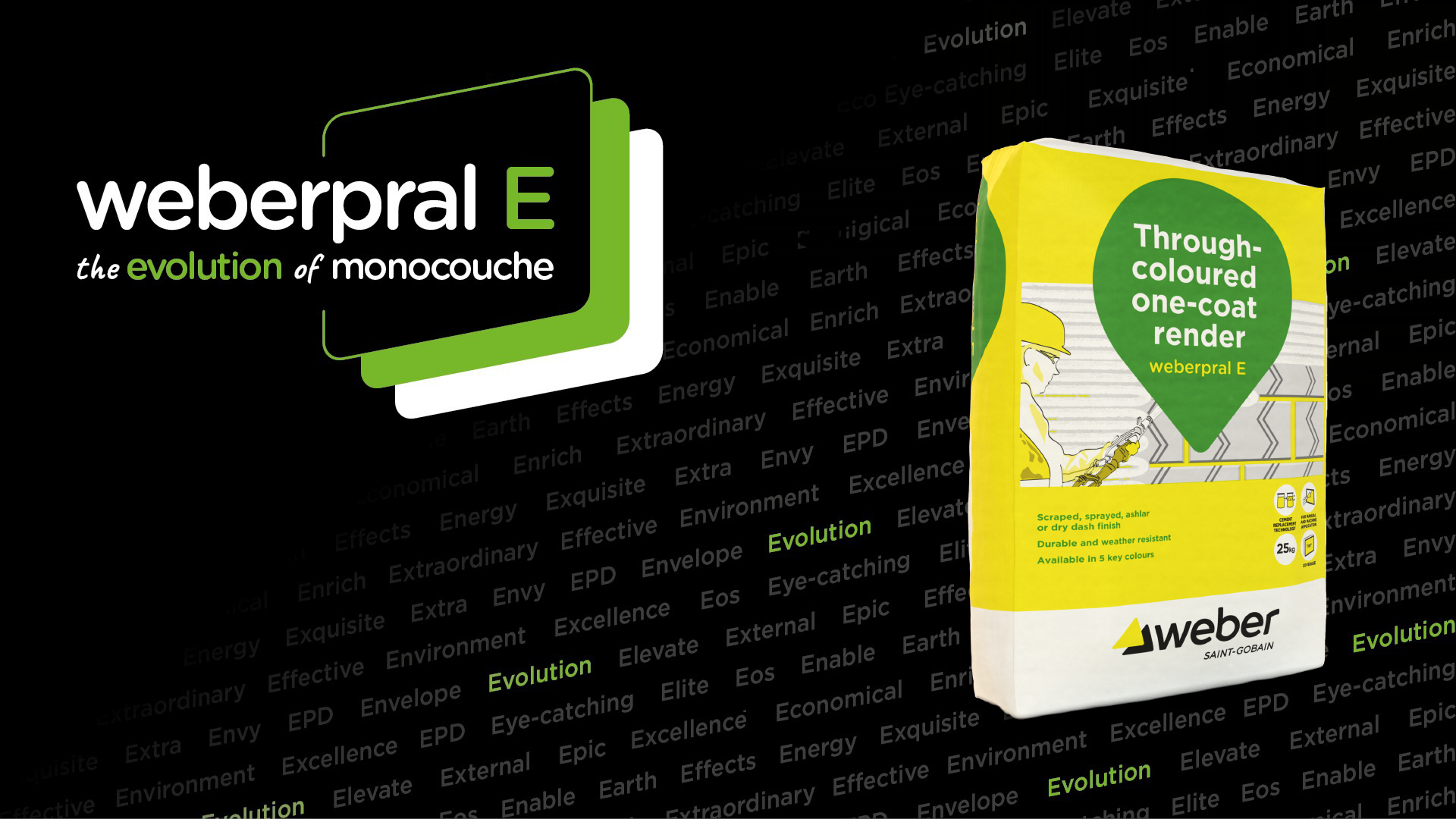
The creation of weberpral E is very significant for us. It’s a monocouche render that incorporates cement replacement technology, which helps reduce its carbon footprint.
Since weberpral M is one of our best-selling products, replacing it with something more sustainable fits into Weber’s wider goal of reducing carbon emissions.
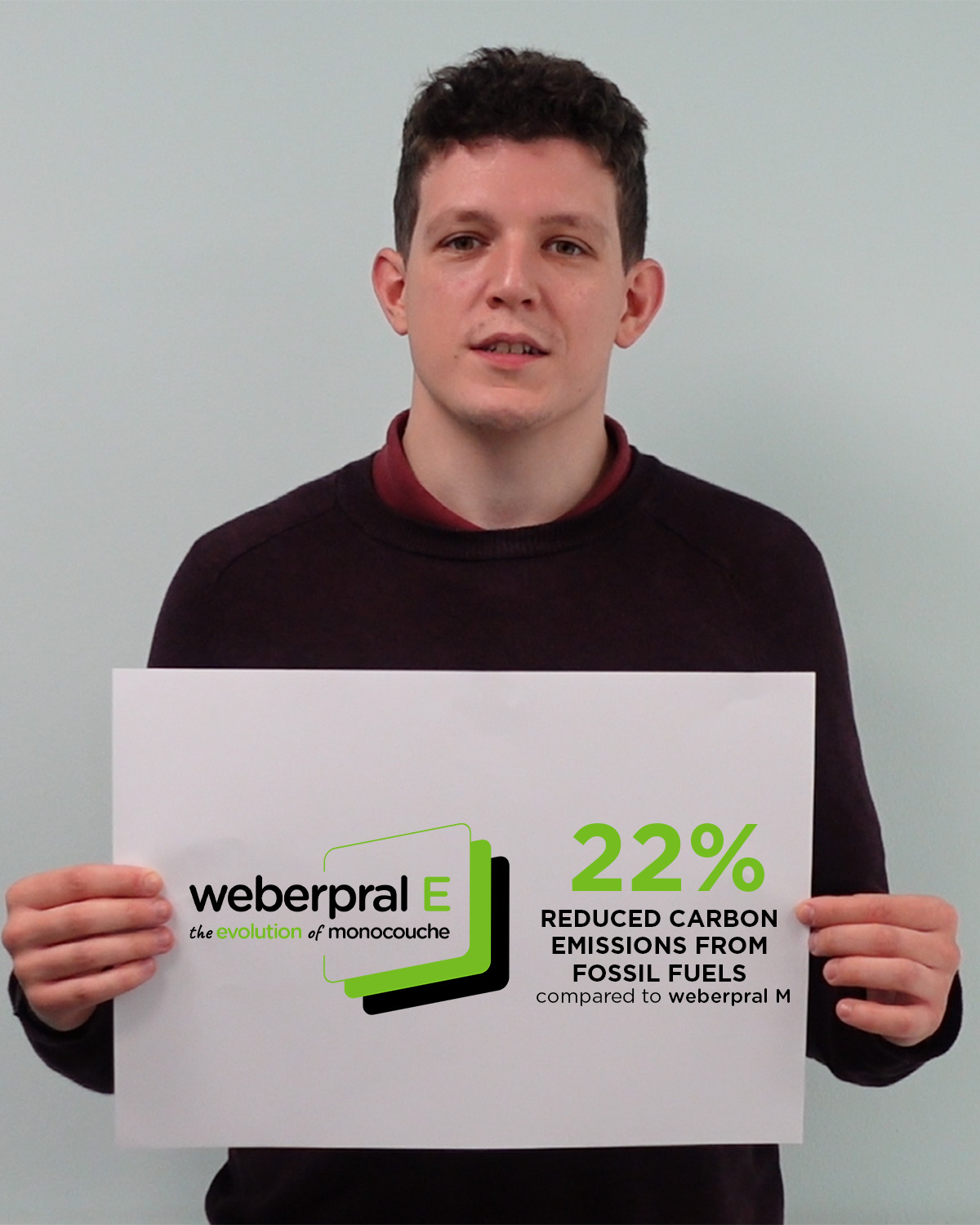
The EPD data for weberpral E shows a 22% reduction in CO2 emissions from fossil fuels compared with our current monocouche render, which is a big step for us.
What are some of the challenges you face in creating an EPD?
The biggest challenge is getting accurate data, especially for raw material sourcing and transport. Sometimes the data isn’t readily available, or it needs to be checked for accuracy, which can slow things down.
When we started developing the EPD for weberpral E, gathering the right data for the cement replacement technology was quite difficult. The whole process can be lengthy, but once the data is in and verified, it’s invaluable for understanding and reducing the environmental impact of our products.
Are EPDs becoming more important in the construction industry?
Absolutely. EPDs are increasingly being used in the construction sector, particularly for achieving certifications like BREEAM – used to specify and measure the sustainability performance of buildings, and the LEED (Leadership in Energy and Environmental Design) green building rating system. EPDs give housebuilders, architects, and developers a clear picture of a product’s environmental impact, helping them reduce their own Scope 3 emissions.
We’re proud that Weber has EPDs to back up our sustainability claims, while many of our competitors don’t yet have the data required to support theirs.
Besides EPDs, what other sustainability initiatives are you working on at Weber?
One of the projects I’m most proud of is the rainwater harvesting system we’re installing at our Flitwick and Telford sites.
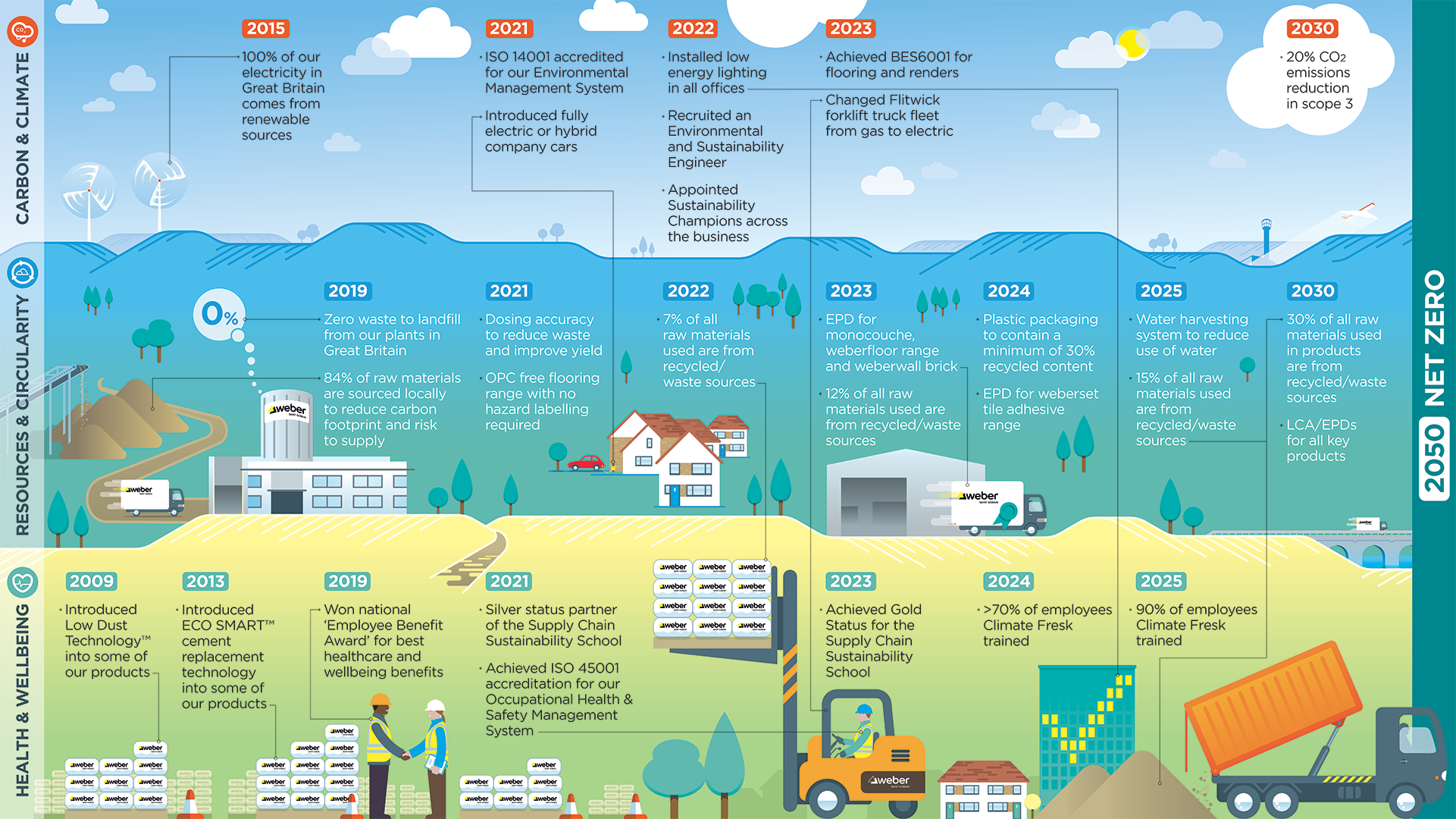
The system captures rainwater, which is then reused for things like flushing toilets, saving about 700 cubic metres of water per year. It’s a simple project, but it aligns with our goal of reducing water consumption and improving our overall environmental footprint.
How do you measure success when it comes to sustainability?
We track a range of key performance indicators (KPIs), from energy usage and water consumption to CO2 emissions. These KPIs feed into our EPDs and help us monitor our progress toward reducing our carbon footprint.
For example, we aim to reduce Scope 3 emissions by 16% by 2030, and we have set targets to achieve 60% of our turnover from products with EPDs by the end of 2024.
These metrics give us a clear sense of where we are and where we need to go.
Looking ahead, what excites you the most about Weber’s sustainability journey?
In 2025 I’m really looking forward to seeing how weberpral E gets adopted in the market. It’s a more sustainable product with great performance and application, and I hope it will eventually overtake weberpral M in terms of usage.
I’m also excited to continue working on new projects that push our sustainability efforts even further, whether it’s reducing water usage or cutting our carbon footprint. The journey is ongoing, and there’s always more we can do.