Mount Pleasant, Stevenage
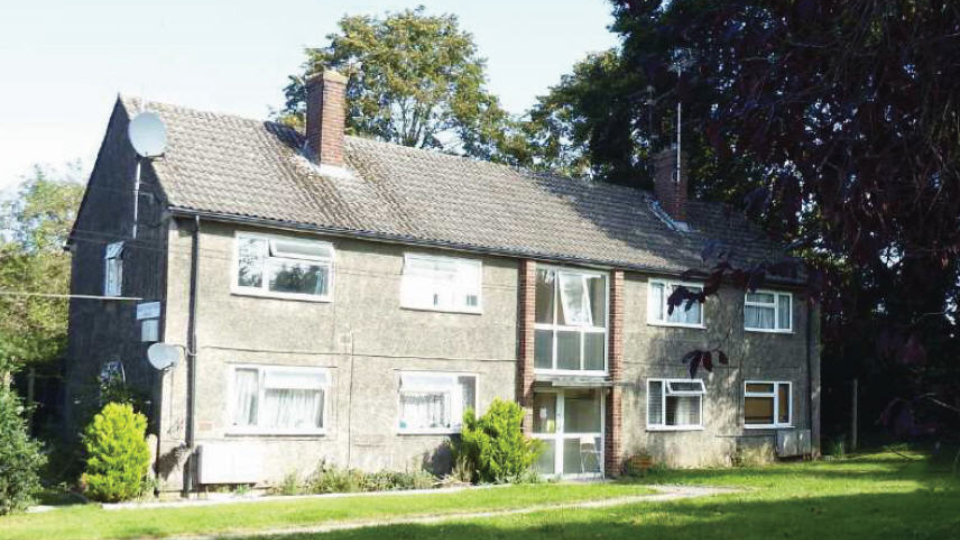
When Stevenage Borough Council set out to improve the energy performance and appearance of its social housing, the twin blocks of flats at Mount Pleasant were used as a pilot project. Originally pebble-dashed, these homes – consisting of eight self-contained social housing flats – presented both aesthetic and structural challenges. The buildings had become tired with inefficient insulation, which was contributing to high energy bills and low resident satisfaction.
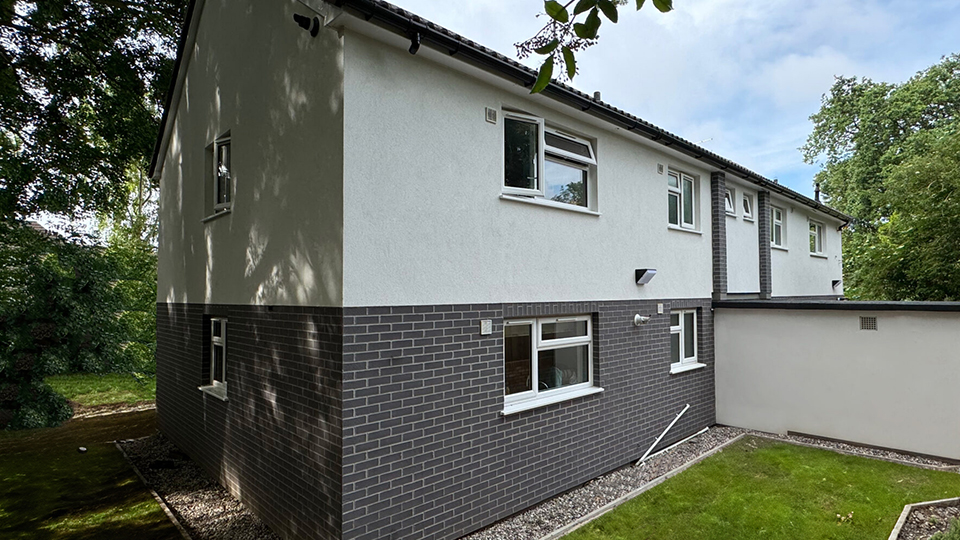
Funded by the Warm Homes: Social Housing Fund (formerly Social Housing Decarbonisation Fund (SHDF)) and delivered under the PAS 2035 framework, this retrofit project was a key part of the council’s wider regeneration plans.
The goal was to deliver warm, attractive, and efficient homes for residents while improving the wider community’s perception.
Working closely with Wates Property Services and Saint-Gobain Weber, applicator PJ Mear Ltd was brought in to turn the vision into reality.
From the outset, the site demanded careful planning, and collaborative problem-solving defined the project. This ensured swift adaptation to the buildings' varied finishes and rigorous adherence to energy and safety standards.
Pull-out tests were conducted by Weber’s application manager Linda Twidale to ensure the substrate could safely support the new external wall insulation (EWI) system.
Installation was far from straightforward, and the team had to navigate some aesthetic and technical challenges, including a flat-roofed storage area at the rear and the integration of gas pipes.
To overcome them, they created bespoke detailing to prevent water ingress via the flat roof and installed custom covers to hide unsightly gas pipes. These were louvred to ensure safety compliance and colour-matched to the façade for visual harmony.
Limited space above top-floor windows was resolved with custom L-shaped PVC trims filled with compressed mineral wool, preserving insulation while maintaining the clean exterior design.
Despite difficult winter conditions and unexpected complexities, the team maintained progress thanks to regular toolbox talks and site visits.
PJ Mear's contracts manager Sam Turley highlighted the importance of responsive supplier support, crediting Weber’s hands-on involvement as key to staying on track.
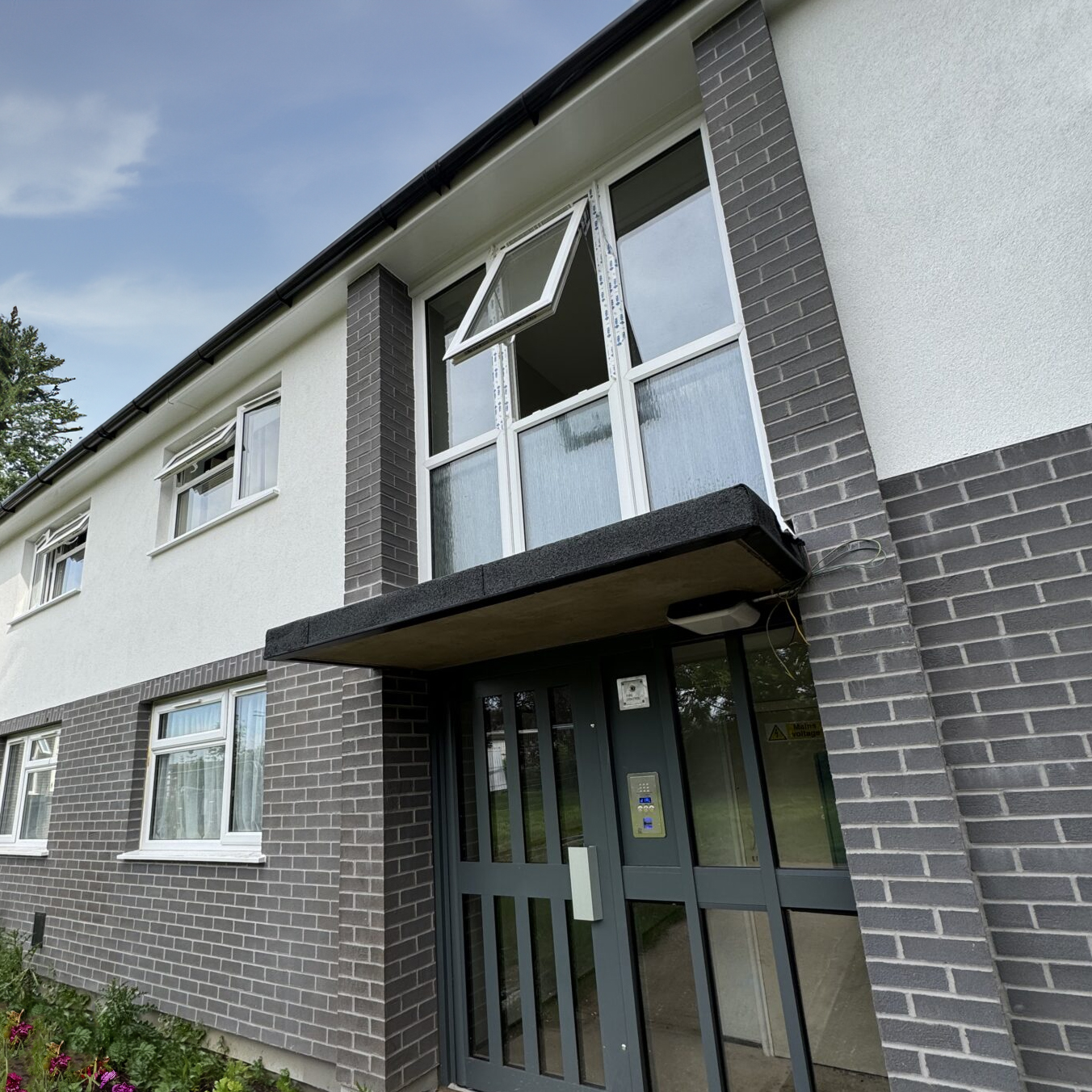
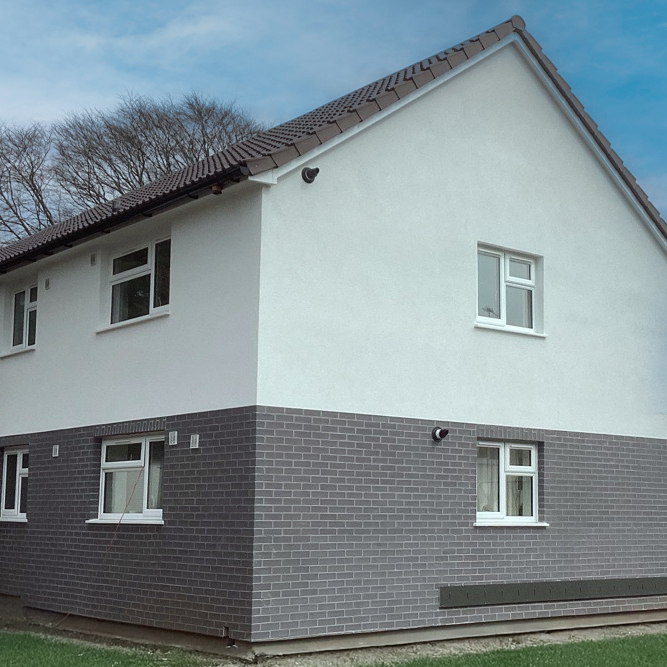
The final EWI installation featured Weber’s webertherm XM system, made up of 120mm of webertherm MFD insulation and weberend LAC rapid – an adhesive render coat – applied in two passes, each approximately 3mm thick, with mesh reinforcement.
The upper level was given a textured finish using webersil TF in Winter White – a durable silicone thin coat render – while Weber’s innovative brick slip system, weberwall brick, in Sanded Slate was installed on the lower level.
The insulation extended below the damp proof course to eliminate cold bridging – a newer requirement under PAS 2035. To minimise disturbance during construction, tenants were notified well in advance through letters and direct communication about the schedule and expected activities. A dedicated Resident Liaison Officer was also available to address any concerns.