Contact us
If you have any questions or would like assistance, please feel free to get in touch with us.
Existing masonry is designed as a finish in its own right. It may not be suitable to accept a direct application of render.
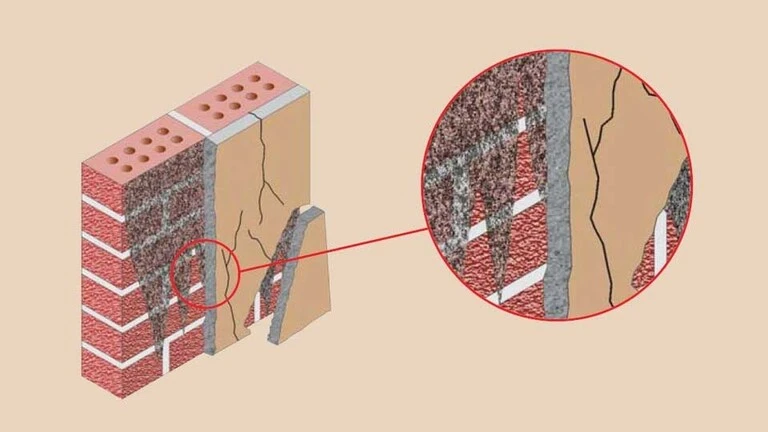
Dirty deposits can form a weak intermediate layer that interferes with the development of the bond of newly applied render.
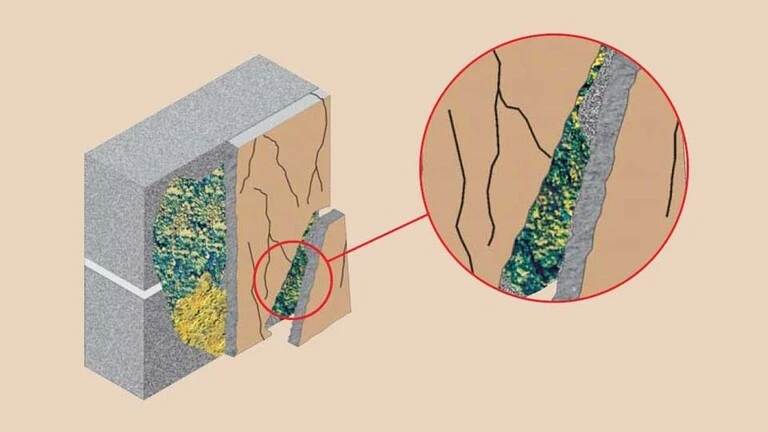
Organic growth, even though it may be brushed from the surface, remains in the pores of the substrate and can continue to grow, delaminating the new render from the substrate.
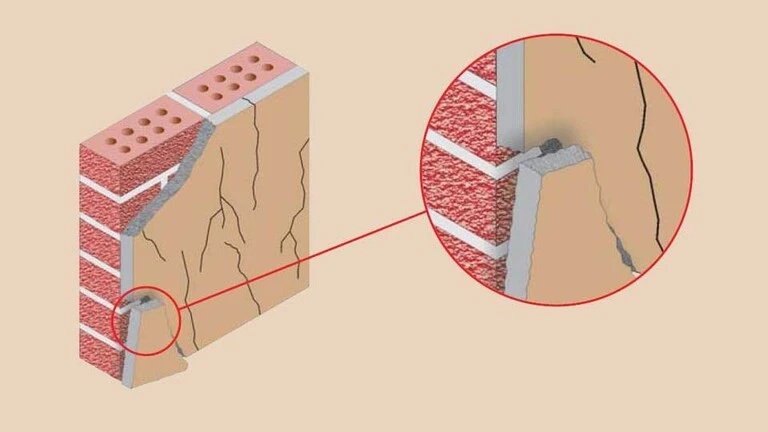
Renders need a combination of mechanical key (texture or roughness) and suction (absorption of the most liquid elements into the substrate) to bond to the wall. Existing masonry surfaces seldom have sufficient key to hold a new render.
Assessment and preparation is of paramount importance. Preparatory key coats are very heavily polymer-modified to 'stick' to 'smooth' substrates and are finished with a deep mechanical key to hold the new render.
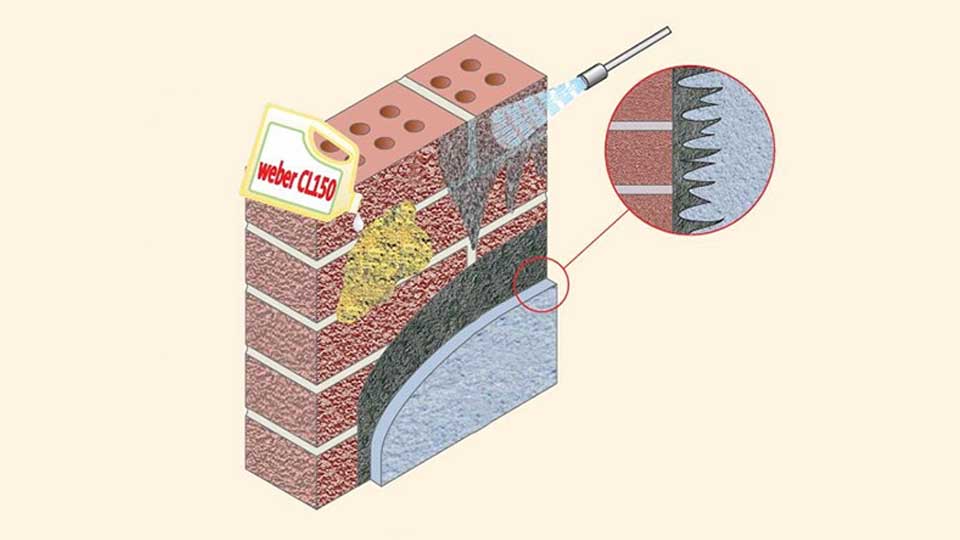
Assess all areas and elevations for contamination. Treat all areas with weber CL150, leave for 48 hours and then remove surface materials with a stiff brush. Power wash dirty and stubborn areas of growth.
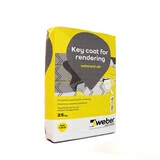
Apply weberend aid at a 2-3mm thickness approximately 1m² at a time with a stipple roller. Texture immediately to leave a deep, heavy stipple key. Treat all elevations to be rendered. Cure as necessary.
Note: Use weberend aid formulated with sulphate-resistant cement when rendering over substrates that may have a high salt content.
Using your choice of render (ie. monocouche render such as weberpral m or weberend OCR and a synthetic finish), apply and finish new render as directed for the relevant materials.
If you have any questions or would like assistance, please feel free to get in touch with us.
Find all our products near you in more than 1,000 branches