Many of our render systems such as the weberend MT panel silicone system and external wall insulation systems such as the webertherm XM acrylic system (MFD) require a layer of weberend LAC rapid which will need to be sponge finished before overcoating with a textured finish thin coat render. Similarly our thin coat render systems for masonry require the same treatment to the base coat layer of weberend OCR whereby it needs a sponge finish to create adequate key.
How to achieve a smooth or float render finish
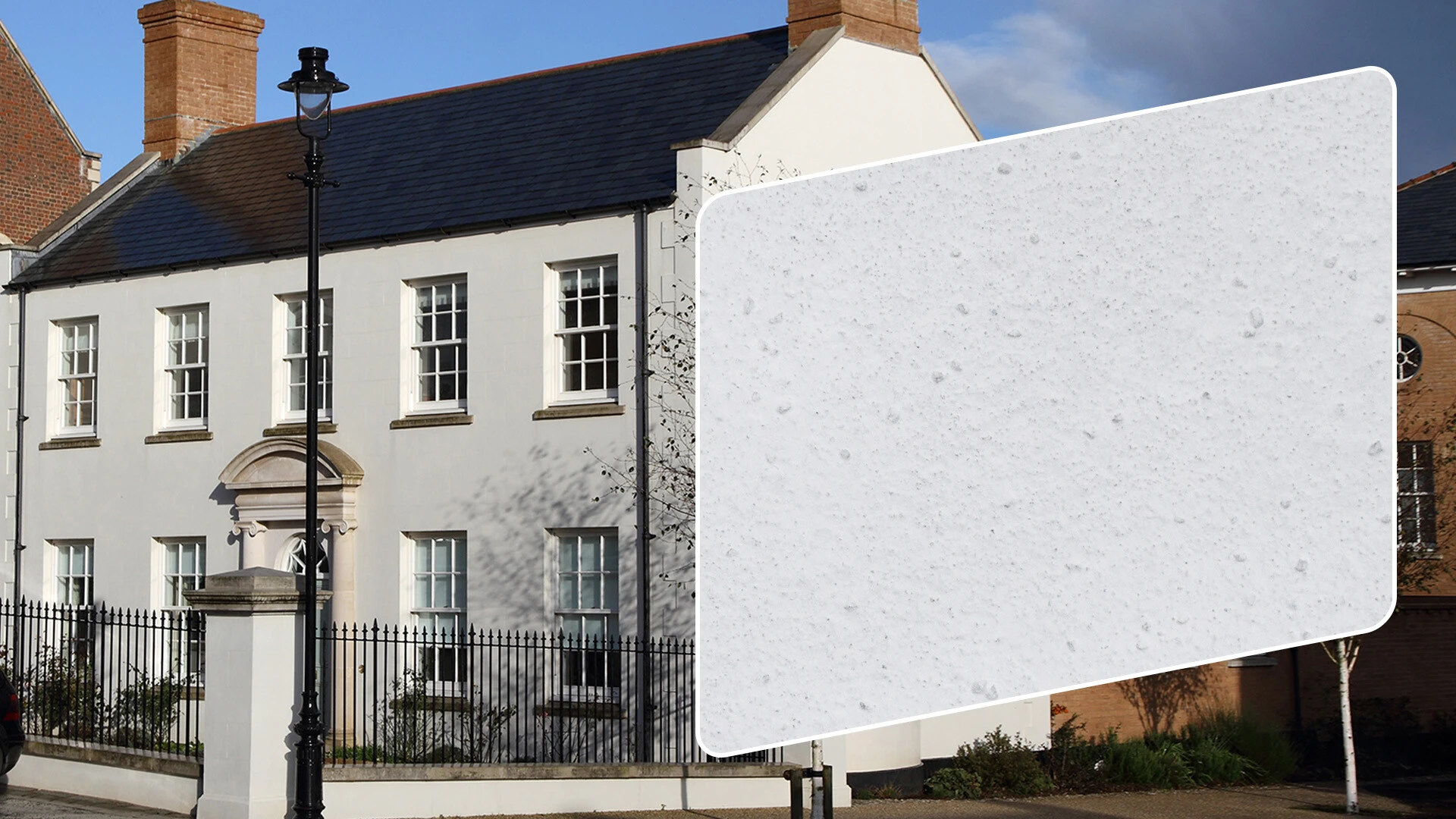
A sponge or float render finish is required as part of many of our façade systems which will have a textured finish or painted finish as the final façade.
How to create a sponge or float finish
To avoid compromising the bond between base coat renders and textured thin coat renders, the base coat render needs to be finished with a sponge float to create adequate key.
Using a ‘figure of eight’ motion with a suitable sponge float across the freshly applied render as it starts to take up will create an ideal surface to apply the final textured finish onto.
Similarly, the sponge finished render can be painted with webersil P to retain the smooth finish of the base coat layer if a textured finish such as webersil TF isn’t desired.
Important
If the render is finished flat off the trowel or after being finished with a spatula or steel trowel, the bond between these two render layers may be inhibited and lead to bubbling or blistering in the final façade.
Still unsure?
If you have any questions or would like more advice on achieving a sponge or float render finish, please contact us.